Sugar industry of the Philippines: Difference between revisions
CSV import |
CSV import Tags: mobile edit mobile web edit |
||
| Line 21: | Line 21: | ||
{{Philippines-stub}} | {{Philippines-stub}} | ||
{{food-stub}} | {{food-stub}} | ||
<gallery> | |||
File:Mount_Kanla-on.jpg|Sugar industry of the Philippines | |||
File:Map_showing_centers_of_origin_of_Saccharum_officinarum_in_New_Guinea,_S._sinensis_in_China,_and_S._barberi_in_India.png|Sugar industry of the Philippines | |||
File:Het_kappen_van_suikerriet_op_de_Filippijnen,_KITLV_D7307.tiff|Sugar industry of the Philippines | |||
File:06893jfCuisine_Foods_Landmarks_Baliuag_Bulacanfvf_41.jpg|Sugar industry of the Philippines | |||
File:Calamba_Sugar_Central_Luzon,_P.I.jpg|Sugar industry of the Philippines | |||
File:Central_Aucarera_de_La_Carlota.jpg|Sugar industry of the Philippines | |||
File:A_sugar_quedan_in_the_Philippines.jpg|Sugar industry of the Philippines | |||
File:LoadingSugarCaneBaisNationalHwy.jpg|Sugar industry of the Philippines | |||
File:Raw_Sugar_Production_in_the_Philippines.jpg|Sugar industry of the Philippines | |||
File:Central_Azucarera_de_Tarlac.jpg|Sugar industry of the Philippines | |||
File:Trucks_delivery_of_sugarcane.jpg|Sugar industry of the Philippines | |||
</gallery> | |||
Revision as of 12:00, 18 February 2025
Sugar industry of the Philippines is a significant sector of the Philippines' economy. It contributes to the country's Gross Domestic Product (GDP) and provides employment opportunities to thousands of Filipinos. The industry is primarily located in the Negros Island, which is often referred to as the "Sugar Bowl of the Philippines".
History
The sugar industry in the Philippines dates back to the pre-colonial period. The early Filipinos discovered the sweet taste of sugarcane and started cultivating it for domestic use. The industry saw significant growth during the Spanish colonial period, when the Spanish colonizers introduced modern methods of sugarcane cultivation and sugar production.
Production
The Philippines is one of the largest sugar producers in the world. The country's sugar industry is divided into several mill districts, each of which is responsible for the production of a specific type of sugar. The most common types of sugar produced in the Philippines are raw sugar, refined sugar, and muscovado sugar.
Economic Impact
The sugar industry plays a crucial role in the Philippine economy. It contributes significantly to the country's GDP and provides employment to thousands of Filipinos. The industry also plays a vital role in the country's foreign trade, with sugar being one of the top export commodities of the Philippines.
Challenges
Despite its significant contributions to the Philippine economy, the sugar industry faces several challenges. These include fluctuating global sugar prices, aging sugar mills, and the threat of climate change.
Future Prospects
The future of the sugar industry in the Philippines looks promising, with the government implementing various measures to boost the industry. These include the Sugar Industry Development Act, which aims to improve the competitiveness of the industry and ensure the welfare of sugarcane farmers.

This article is a Philippines-related stub. You can help WikiMD by expanding it!

-
 Sugar industry of the Philippines
 -
 Sugar industry of the Philippines
 -
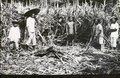 Sugar industry of the Philippines
 -
 Sugar industry of the Philippines
 -
 Sugar industry of the Philippines
 -
 Sugar industry of the Philippines
 -
 Sugar industry of the Philippines
 -
 Sugar industry of the Philippines
 -
 Sugar industry of the Philippines
 -
 Sugar industry of the Philippines
 -
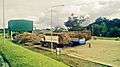 Sugar industry of the Philippines


