Diet and obesity: Difference between revisions
CSV import Tags: mobile edit mobile web edit |
CSV import |
||
| Line 32: | Line 32: | ||
{{medicine-stub}} | {{medicine-stub}} | ||
<gallery> | |||
File:World_map_of_calory_consumption_1961_(v2).svg|World map of calorie consumption in 1961 | |||
File:World_map_of_Energy_consumption_1979-1981.svg|World map of energy consumption 1979-1981 | |||
File:World_map_of_Energy_consumption_2001-2003.svg|World map of energy consumption 2001-2003 | |||
File:World_Per_Person_Energy_Consumption.png|World per person energy consumption | |||
File:USFood_trends.gif|US food trends | |||
File:USFood_trends2.gif|US food trends 2 | |||
File:Indicatorslongrun579.gif|Indicators long run | |||
File:Cheeseburger_portions.jpg|Cheeseburger portions | |||
File:Prevalence_Of_Obesity_In_The_Adult_Population_By_Region.svg|Prevalence of obesity in the adult population by region | |||
File:Prevalence_Of_Obesity_In_The_Adult_Population_(2016).svg|Prevalence of obesity in the adult population (2016) | |||
</gallery> | |||
Latest revision as of 11:53, 18 February 2025
Diet and Obesity
Obesity is a complex health condition characterized by an excessive amount of body fat. It is a global health issue that affects millions of people and is associated with numerous health problems, including heart disease, diabetes, and high blood pressure. The role of diet in the development and management of obesity is critical, as dietary habits directly influence body weight and overall health.
Causes of Obesity[edit]
Obesity results from a combination of causes and contributing factors, including genetics, behavior, and environment. However, the primary cause of obesity is an energy imbalance between calories consumed and calories expended. Consuming more calories from food and drinks than your body uses for physical activity, metabolism, and daily functions leads to weight gain. Over time, this energy imbalance can result in obesity.
Dietary Factors[edit]
The quality, quantity, and type of food consumed play a significant role in determining a person's weight. Diets high in calories, especially those coming from fast food, sugary beverages, and high-fat foods, can contribute to weight gain. Conversely, a diet rich in fruits, vegetables, whole grains, and lean proteins can help maintain a healthy weight and reduce the risk of obesity.
Processed Foods[edit]
Processed foods often contain high levels of added sugars, fats, and salt, which can contribute to excessive calorie intake and weight gain. These foods are also typically low in essential nutrients and dietary fiber, which are important for maintaining a healthy weight.
Portion Sizes[edit]
Increased portion sizes in restaurants and packaged foods have contributed to overeating and weight gain. Consuming larger portions than needed can lead to a higher intake of calories, contributing to obesity.
Prevention and Management[edit]
Preventing and managing obesity involves a multifaceted approach that includes dietary changes, physical activity, and behavioral modifications. Adopting a healthy eating pattern that focuses on nutrient-dense foods in appropriate portion sizes is essential for weight management.
Healthy Eating Patterns[edit]
A balanced diet that includes a variety of fruits, vegetables, whole grains, lean proteins, and healthy fats can help control weight. Limiting the intake of processed foods, sugary beverages, and high-calorie snacks is also crucial.
Physical Activity[edit]
In addition to dietary changes, regular physical activity is essential for weight management and overall health. Exercise helps burn calories, increase metabolism, and build muscle mass, contributing to weight loss and the prevention of obesity.
Conclusion[edit]
Diet plays a pivotal role in the development, prevention, and management of obesity. A healthy diet, combined with regular physical activity and behavioral changes, can help achieve and maintain a healthy weight. Addressing obesity requires a comprehensive approach that includes individual actions and broader societal changes to promote healthy eating and active living.

-
 World map of calorie consumption in 1961
 -
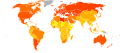 World map of energy consumption 1979-1981
 -
 World map of energy consumption 2001-2003
 -
 World per person energy consumption
 -
 US food trends
 -
 US food trends 2
 -
 Indicators long run
 -
 Cheeseburger portions
 -
 Prevalence of obesity in the adult population by region
 -
 Prevalence of obesity in the adult population (2016)
.svg)


.svg)
