Coracobrachialis muscle: Difference between revisions
CSV import Tags: mobile edit mobile web edit |
CSV import |
||
| Line 31: | Line 31: | ||
[[Category:Muscular system]] | [[Category:Muscular system]] | ||
[[Category:Upper limb anatomy]] | [[Category:Upper limb anatomy]] | ||
<gallery> | |||
File:Coracobrachialis.png|Coracobrachialis muscle | |||
File:Coracobrachialis_muscle05.png|Coracobrachialis muscle | |||
File:Coracobrachialis_muscle_-_animation01.gif|Coracobrachialis muscle | |||
File:Coracobrachialis_muscle_-_animation05.gif|Coracobrachialis muscle | |||
File:Coracobrachialis_muscle07.png|Coracobrachialis muscle | |||
File:Gray1231.png|Coracobrachialis muscle | |||
File:Slide7n.JPG|Coracobrachialis muscle | |||
File:Slide5B.JPG|Coracobrachialis muscle | |||
File:Slide1HHH.JPG|Coracobrachialis muscle | |||
File:Slide1JJJ.JPG|Coracobrachialis muscle | |||
File:Slide3OOO.JPG|Coracobrachialis muscle | |||
</gallery> | |||
Latest revision as of 11:51, 18 February 2025
Coracobrachialis muscle is a small, cylindrical muscle located in the upper arm. It plays a crucial role in the movement and stabilization of the shoulder joint. The muscle originates from the coracoid process of the scapula and inserts into the medial surface of the humerus shaft. It is innervated by the musculocutaneous nerve and receives its blood supply from the brachial artery.
Anatomy[edit]
The coracobrachialis muscle is one of the three muscles that make up the anterior compartment of the arm, along with the biceps brachii and brachialis muscles. It extends from the coracoid process of the scapula to the middle third of the medial surface of the humerus. This muscle is situated deep to the biceps brachii and is partially covered by the pectoralis major at its origin.
Origin and Insertion[edit]
The coracobrachialis originates from the tip of the coracoid process of the scapula. It inserts into the medial surface of the humerus, specifically at the rough area of the middle third of the bone. This positioning allows the muscle to exert its effects on the shoulder joint.
Innervation[edit]
The coracobrachialis is innervated by the musculocutaneous nerve, a branch of the brachial plexus. The nerve enters the muscle on its medial side, providing the necessary stimuli for muscle contraction.
Blood Supply[edit]
Blood supply to the coracobrachialis is primarily through the brachial artery. Smaller branches from the artery penetrate the muscle to deliver oxygenated blood and nutrients.
Function[edit]
The primary function of the coracobrachialis is to assist in flexing and adducting the arm at the shoulder joint. It acts synergistically with other muscles of the shoulder to stabilize the joint, especially during movements of the arm. The coracobrachialis also helps in preventing dislocation of the shoulder by holding the head of the humerus in the glenoid cavity of the scapula.
Clinical Significance[edit]
Injury to the coracobrachialis or its nerve supply can result in weakness or loss of function in flexing and adducting the arm. Such injuries may occur due to trauma, repetitive use, or as a result of surgical procedures in the vicinity of the muscle or its nerve supply.
Exercises[edit]
Strengthening and stretching exercises targeting the coracobrachialis can improve the muscle's function and reduce the risk of injury. Examples include resistance band exercises and specific stretches that target the anterior shoulder compartment.
See Also[edit]
-
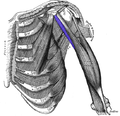 Coracobrachialis muscle
 -
 Coracobrachialis muscle
 -
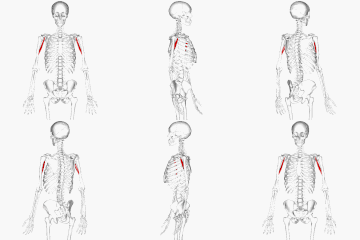 Coracobrachialis muscle
 -
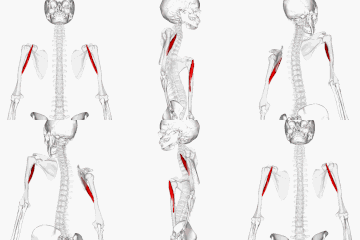 Coracobrachialis muscle
 -
 Coracobrachialis muscle
 -
 Coracobrachialis muscle
 -
 Coracobrachialis muscle
 -
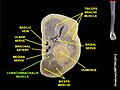 Coracobrachialis muscle
 -
 Coracobrachialis muscle
 -
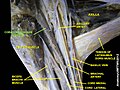 Coracobrachialis muscle
 -
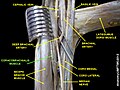 Coracobrachialis muscle


