Kvass barrel: Difference between revisions
CSV import Tags: mobile edit mobile web edit |
CSV import |
||
| Line 22: | Line 22: | ||
[[Category:Fermented drinks]] | [[Category:Fermented drinks]] | ||
{{food-stub}} | {{food-stub}} | ||
<gallery> | |||
File:Koenigsberg-097.jpg|Kvass barrel | |||
File:Kvass_being_sold_in_the_streets_of_Kaliningrad.jpg|Kvass being sold in the streets of Kaliningrad | |||
File:Kvas_(Udmurtia).jpg|Kvass barrel | |||
File:Kwass_kyjiw.jpg|Kvass barrel | |||
File:Kwass-Verkauf_in_Nishnij_Novgorod.jpg|Kvass sale in Nizhny Novgorod | |||
File:Квасные_бочки_на_заводе.jpg|Kvass barrels at the factory | |||
File:Kvass_tractor_2008_G1.jpg|Kvass tractor 2008 | |||
File:Квасная_бочка_в_Могилёве.JPG|Kvass barrel in Mogilev | |||
</gallery> | |||
Latest revision as of 11:50, 18 February 2025
Kvass Barrel
A kvass barrel is a traditional container used for fermenting, storing, and dispensing kvass, a popular fermented beverage in Eastern Europe, particularly in Russia, Ukraine, and Belarus. Kvass is made from rye bread, which gives it a distinctive flavor and low alcohol content, making it a common non-alcoholic option in many of these cultures. The kvass barrel plays a crucial role in the fermentation process and in preserving the unique taste and quality of kvass.
History[edit]
The use of kvass barrels dates back several centuries, with kvass itself being a staple drink in Eastern Europe since the Middle Ages. Initially, kvass was brewed at home, but over time, it became commercialized, and kvass barrels became a common sight in towns and cities, often found in marketplaces or being transported by vendors.
Design and Material[edit]
Traditionally, kvass barrels are made from wood, which contributes to the fermentation process and adds to the flavor of the kvass. The size of the barrels can vary, but they are typically large enough to hold a significant quantity of kvass, ensuring a steady supply for sale. The wooden construction helps in maintaining a constant temperature during the fermentation process, which is crucial for achieving the desired taste and quality of kvass.
Modern Usage[edit]
In modern times, the sight of traditional kvass barrels has become less common, with metal and plastic containers often taking their place. However, in many parts of Eastern Europe, traditional wooden kvass barrels are still used, especially by artisanal producers who aim to preserve the authentic taste and brewing methods of kvass. These barrels are not only used for fermentation but also serve as an attractive means of dispensing kvass in markets and festivals, adding to the cultural experience.
Cultural Significance[edit]
The kvass barrel is more than just a container; it is a symbol of the rich culinary and cultural heritage of Eastern Europe. It represents a time-honored tradition of kvass production and consumption, reflecting the importance of this beverage in the daily lives and festivities of the people in this region.
Preservation[edit]
Efforts to preserve traditional kvass brewing techniques, including the use of wooden kvass barrels, are part of a broader movement to maintain cultural heritage. This includes educational programs, festivals, and the promotion of traditional kvass in the culinary tourism industry.

-
 Kvass barrel
 -
Kvass being sold in the streets of Kaliningrad
-
 Kvass barrel
 -
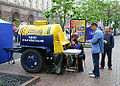 Kvass barrel
 -
 Kvass sale in Nizhny Novgorod
 -
 Kvass barrels at the factory
 -
 Kvass tractor 2008
 -
 Kvass barrel in Mogilev

.jpg)


