Weather forecasting: Difference between revisions
CSV import Tags: mobile edit mobile web edit |
CSV import |
||
| Line 27: | Line 27: | ||
[[Category:Meteorology]] | [[Category:Meteorology]] | ||
{{Weather-stub}} | {{Weather-stub}} | ||
<gallery> | |||
File:Day5pressureforecast.png|Weather_forecasting | |||
File:StateLibQld_1_186783_Royal_Charter_(ship).jpg|Weather_forecasting | |||
File:Meyers_b16_s0570.jpg|Weather_forecasting | |||
File:Improved-weather-forecasting_7463.png|Weather_forecasting | |||
File:BBC_television_weather_chart_-_1936-11-13.jpg|Weather_forecasting | |||
File:NAM_500_MB.PNG|Weather_forecasting | |||
File:2005-09-22-10PM_CDT_Hurricane_Rita_3_day_path.png|Weather_forecasting | |||
File:marestail.jpg|Weather_forecasting | |||
File:NAM_500_MB.PNG|Weather_forecasting | |||
File:Newspaper_weather_forecast_-_today_and_tomorrow.svg|Weather_forecasting | |||
File:Plume_from_eruption_of_Chaiten_volcano,_Chile.jpg|Weather_forecasting | |||
File:Air_handling_unit.JPG|Weather_forecasting | |||
</gallery> | |||
Latest revision as of 11:50, 18 February 2025
Weather forecasting is the application of science and technology to predict the conditions of the atmosphere for a given location and time. Humans have attempted to predict the weather informally for millennia and formally since the 19th century. Weather forecasts are made by collecting quantitative data about the current state of the atmosphere at a given place and using meteorology to project how the atmosphere will change.
History[edit]
The history of weather forecasting can be traced back to ancient times. Early methods relied on observed patterns and correlations. The invention of the telegraph in the mid-19th century allowed for more rapid dissemination of weather information, leading to the development of formal weather forecasting.
Methods[edit]
Modern weather forecasting involves a combination of computer models, observation, and a knowledge of trends and patterns. Using these methods, accurate forecasts for locations can be made up to seven days in advance.
Observation[edit]
Observation is a critical component of weather forecasting. Data is collected from weather stations around the world, which monitor parameters such as temperature, humidity, wind speed and direction, and atmospheric pressure.
Computer models[edit]
Computer models play an integral role in weather forecasting. These models use complex algorithms to predict future atmospheric conditions based on current observations. The most commonly used models are the Global Forecast System (GFS) and the European Centre for Medium-Range Weather Forecasts (ECMWF) model.
Applications[edit]
Weather forecasting has numerous applications. It is used in agriculture, aviation, and maritime operations, among other fields. Accurate weather forecasting can save lives and property by providing advance warning of severe weather conditions such as hurricanes, tornadoes, and blizzards.
Limitations[edit]
Despite advances in technology, weather forecasting is not always accurate. This is due to the chaotic nature of the atmosphere and the limitations of data collection and processing.
See also[edit]

-
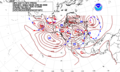 Weather_forecasting
 -
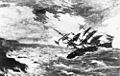 Weather_forecasting
 -
 Weather_forecasting
 -
 Weather_forecasting
 -
 Weather_forecasting
 -
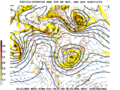 Weather_forecasting
 -
 Weather_forecasting
 -
 Weather_forecasting
 -
Weather_forecasting
-
 Weather_forecasting
 -
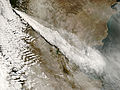 Weather_forecasting
 -
 Weather_forecasting

.jpg)


