Invasion: Difference between revisions
No edit summary |
CSV import |
||
| Line 31: | Line 31: | ||
[[Category:Military]] | [[Category:Military]] | ||
[[Category:Biology]] | [[Category:Biology]] | ||
<gallery> | |||
File:OperationBarbarossa.PNG|Invasion | |||
File:GreatWallNearBeijingWinter.jpg|Invasion | |||
File:Castle_Church_and_Harbour.JPG|Invasion | |||
File:maginot_line_2.jpg|Invasion | |||
File:German_troops_parade_through_Warsaw,_Poland,_09-1939_-_NARA_-_559369.jpg|Invasion | |||
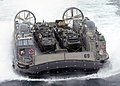
File:US_Navy_030113-N-2972R-114_A_Landing_Craft_Air_Cushion_(LCAC)_Vehicle_from_Assault_Craft_Unit_Four_(ACU-4)_transports_Marine_Assault_Vehicles_to_Kearsarge.jpg|Invasion | |||
File:Waves_of_paratroops_land_in_Holland.jpg|Invasion | |||
File:PSYOPS3ap.jpg|Invasion | |||
File:Выдвижение_танкового_подразделения_в_Киевской_области_в_ходе_вторжения_на_Украину_006.png|Invasion | |||
File:SOTM.jpg|Invasion | |||
File:President_Zelenskyy_says_Russia_is_a_grave_threat_to_the_European_way_of_life_(52678467391).jpg|Invasion | |||
</gallery> | |||
Latest revision as of 11:50, 18 February 2025
Invasion is a term with Latin roots, typically denoting the action of entering or taking control over foreign territory. While the concept of invasion is primarily associated with military conquests, it has also been adapted to describe various phenomena in other fields.
Etymology[edit]
The term "invasion" is derived from the Latin word, signifying the act of going in. This encapsulates the essence of the word – an unwelcome intrusion or takeover.
Types of Invasions[edit]
Military Invasion[edit]
In a military context, invasion refers to the deployment of troops with the intent of taking control of enemy territory. While invasions often precede the official commencement of wars, they can also take place during ongoing conflicts. The purpose may range from territorial expansion to punitive actions or strategic dominance.
Biological Invasion[edit]
In the realm of biology, the term invasion is often employed to describe situations where a species rapidly proliferates in a new environment, typically at the expense of native species. Such "invasive species" can upset ecological balances and cause significant harm to local ecosystems.
Examples[edit]
- Locust Swarms: Periodic invasions of locusts can lead to significant agricultural damage, given their voracious appetites.
- Rabbit Invasion in Australia: The introduction of rabbits to Australia serves as a quintessential example of the unintended consequences of invasive species. The rapid proliferation of rabbits, devoid of natural predators, led to widespread environmental degradation. To counter this, foxes were introduced, further complicating the ecological balance.
Social and Cultural Implications[edit]
While invasions in the military sense lead to obvious political and territorial consequences, biological invasions can have profound socio-economic impacts. For instance, invasive species can devastate agricultural output, lead to the extinction of native species, and require significant resources to manage or eradicate.
See Also[edit]

-
 Invasion
 -
 Invasion
 -
 Invasion
 -
 Invasion
 -
 Invasion
 -
 Invasion
 -
 Invasion
 -
 Invasion
 -
 Invasion
 -
 Invasion
 -
 Invasion


_Vehicle_from_Assault_Craft_Unit_Four_(ACU-4)_transports_Marine_Assault_Vehicles_to_Kearsarge.jpg)


.jpg)
