Pompeii: Difference between revisions
CSV import |
CSV import |
||
| Line 26: | Line 26: | ||
{{Italy-stub}} | {{Italy-stub}} | ||
{{archaeology-stub}} | {{archaeology-stub}} | ||
<gallery> | |||
File:Theathres_of_Pompeii.jpg|Theatres of Pompeii | |||
File:Pompeii_Forum.JPG|Pompeii Forum | |||
File:Map_of_setteling_phases_of_Pompeii.png|Map of settling phases of Pompeii | |||
File:Triangular_Forum_(7238763042).jpg|Triangular Forum | |||
File:Pompeii_Tempel_van_Apollo.jpg|Pompeii Temple of Apollo | |||
File:Ancient_Roman_Pompeii_-_Pompeji_-_Campania_-_Italy_-_July_10th_2013_-_46.jpg|Pompeii | |||
File:I08_141_großes_Theater.jpg|Pompeii | |||
File:Pompeii_2021_-_04_(Odeon).jpg|Pompeii | |||
File:Ancient_Roman_Pompeii_-_Pompeji_-_Campania_-_Italy_-_July_10th_2013_-_26.jpg|Pompeii | |||
File:Veduta_dall'alto_della_Casa_dei_Gladiatori.jpg|Pompeii | |||
File:Pittura_di_pompei_con_zuffa_tra_pompeiani_e_nocerini.jpg|Pompeii | |||
File:Pompeian_bas-relief,_depicting_the_tilting_buildings_in_the_Forum_of_Pompeii_during_the_AD_62_earthquake,_AD_62-79,_Exhibition_“Pompeii_And_Santorini._Eternity_In_A_Day”_at_the_Scuderie_Del_Quirinale,_Rome_(49904946677).jpg|Pompeii | |||
</gallery> | |||
Latest revision as of 11:46, 18 February 2025
Pompeii was an ancient city located in the modern comune of Pompei near Naples in the Campania region of Italy. Pompeii, along with Herculaneum and many villas in the surrounding area (e.g. at Boscoreale, Stabiae), was buried under 4 to 6 m (13 to 20 ft) of volcanic ash and pumice in the eruption of Mount Vesuvius in AD 79.
History[edit]
Pompeii was a bustling city and a major resort for wealthy Romans before the catastrophic eruption of Mount Vesuvius. It was a city of considerable importance to the Roman economy, as it produced goods such as wine and oil, which were shipped to Rome or other cities in the empire.
Archaeological Significance[edit]
The city has been preserved as it was when it was buried in 79 AD. The lack of air and moisture allowed for the preservation of many objects and buildings, providing a unique snapshot of Roman life. Pompeii has been a tourist destination for over 250 years and is one of Italy's most popular tourist attractions.
Excavations[edit]
The excavations of Pompeii are an important source for understanding of the social, economic, and political life of the ancient Roman Empire. Excavations began in 1748 under the auspices of Charles III of Bourbon, king of Naples. Today, the Archaeological Park of Pompeii is one of the most famous and visited archaeological sites in the world.
Culture[edit]
Pompeii was a multicultural city, with a vast number of inhabitants from different regions of the Roman Empire. The city was a melting pot of different cultures and traditions, which is reflected in the variety of art and architecture found in the city.
Conclusion[edit]
The city of Pompeii offers a unique insight into the life of a city during the Pax Romana. Today, the ruins attract more than 2.5 million visitors every year.
| Ancient Rome topics | ||||||||
|---|---|---|---|---|---|---|---|---|
|
| Archaeology | ||||||||||||||||||
|---|---|---|---|---|---|---|---|---|---|---|---|---|---|---|---|---|---|---|
* Category
|
| Italy |
|---|
|
|

This Italy related articles is a stub.


-
 Theatres of Pompeii
 -
 Pompeii Forum
 -
 Map of settling phases of Pompeii
 -
 Triangular Forum
 -
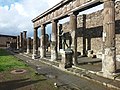 Pompeii Temple of Apollo
 -
 Pompeii
 -
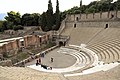 Pompeii
 -
 Pompeii
 -
 Pompeii
 -
 Pompeii
 -
 Pompeii
 -
 Pompeii


.jpg)


.jpg)


.jpg)
