Xiaolongbao: Difference between revisions
CSV import |
CSV import |
||
| Line 35: | Line 35: | ||
[[Category:Dumplings]] | [[Category:Dumplings]] | ||
[[Category:Shanghai cuisine]] | [[Category:Shanghai cuisine]] | ||
<gallery> | |||
File:A_Xiaolongbao_from_The_Modern_Shanghai.jpg|Xiaolongbao | |||
File:Xiaolongbao_1_2017-02-22.jpg|Xiaolongbao | |||
File:Xiaolongbao-breakfast.jpg|Xiaolongbao | |||
File:A_Xiaolongbao_from_Wu_Yeung_Chun_Causeway_Bay.jpg|Xiaolongbao | |||
File:TW_台灣_Taiwan_台北_Taipei_大安區_Da'An_信義路二段_Xinyi_Road_鼎泰豐_Din_Tai_Fung_Restaurant_food_March_2024_R12S_121.jpg|Xiaolongbao | |||
File:Dinesty_Chinese_Restaurant_(4428182989).jpg|Xiaolongbao | |||
File:TW_台灣_Taiwan_台北_Taipei_大安區_Da'An_信義路二段_Xinyi_Road_鼎泰豐_Din_Tai_Fung_Restaurant_food_March_2024_R12S_128.jpg|Xiaolongbao | |||
File:Xin_Feng_Xiao_Chi,_Xiao_Long_&_Wonton.jpg|Xiaolongbao | |||
File:HK_CWB_銅鑼灣_Causeway_Bay_記利佐治街_Great_George_Street_翡翠明珠廣場_JP_Plaza_mall_shop_上海姥姥_Shanghai_Lao_Lao_Restaurant_November_2021_SS2_22.jpg|Xiaolongbao | |||
File:GD_廣東_Guangdong_中山_Zhongshan_東區_Dong_District_怡華街_Yihua_Street_shop_沙縣小食_Shaxian_delicacies_noodle_小籠包_Xiaolongbao_August_2024_R12S_06.jpg|Xiaolongbao | |||
File:Shengzhou-style_Xiaolongbao_and_a_tea_egg_at_a_restaurant_near_Wanshousi,_Beijing_(20230313082409).jpg|Xiaolongbao | |||
File:Xiao_Long_Bao_in_local_noodle_shop.jpg|Xiaolongbao | |||
</gallery> | |||
Latest revision as of 11:45, 18 February 2025
Xiaolongbao[edit]
Xiaolongbao, also known as soup dumplings, is a type of Chinese steamed bun filled with savory soup and meat filling. It is a popular dish in Shanghai and has gained popularity worldwide. In this article, we will explore the origins, ingredients, preparation, and cultural significance of Xiaolongbao.
Origins[edit]
Xiaolongbao originated in the Jiangnan region of China, specifically in Shanghai. It is believed to have been created during the late Qing Dynasty, around the 19th century. The dish was initially made as a variation of Tangbao, a larger steamed bun filled with soup and meat. However, Xiaolongbao is smaller in size and has a thinner skin, making it more delicate and flavorful.
Ingredients[edit]
The key ingredients used in Xiaolongbao include:
- Ground pork or minced meat: This forms the main filling of the dumpling and is typically seasoned with soy sauce, ginger, garlic, and other spices.
- Gelatinized broth: A rich and flavorful broth is added to the filling, which turns into soup when steamed. The gelatinized broth is made by simmering meat or bones for an extended period, allowing the collagen to dissolve and create a jelly-like consistency when cooled.
- Dumpling wrappers: Xiaolongbao wrappers are made from a mixture of wheat flour, water, and sometimes a small amount of lard. The dough is rolled out into thin circles and then filled with the meat and broth mixture.
Preparation[edit]
To make Xiaolongbao, the following steps are typically followed:
- Prepare the filling by combining ground pork or minced meat with seasonings such as soy sauce, ginger, garlic, and other spices.
- Create the gelatinized broth by simmering meat or bones for an extended period until the collagen dissolves and creates a jelly-like consistency when cooled.
- Roll out the dumpling wrappers into thin circles and place a small amount of filling in the center of each wrapper.
- Add a spoonful of gelatinized broth to the filling, ensuring that each dumpling has a sufficient amount of soup.
- Carefully pleat and seal the dumplings, ensuring that they are tightly sealed to prevent the soup from leaking during steaming.
- Steam the Xiaolongbao in a bamboo steamer for about 8-10 minutes until the wrappers become translucent and the filling is cooked.
- Serve the Xiaolongbao hot, traditionally in a bamboo steamer basket, with black vinegar and julienned ginger as dipping sauce.
Cultural Significance[edit]
Xiaolongbao holds a significant place in Chinese cuisine and culture. It is often enjoyed as a breakfast or lunch dish and is commonly found in dim sum restaurants. The delicate nature of Xiaolongbao requires skill and precision in both making and eating. The soup inside the dumpling is a delightful surprise, and the act of carefully biting into the dumpling without spilling the soup is considered a mark of culinary expertise.
See Also[edit]
References[edit]
<references />
-
 Xiaolongbao
 -
 Xiaolongbao
 -
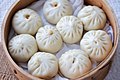 Xiaolongbao
 -
 Xiaolongbao
 -
 Xiaolongbao
 -
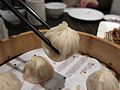 Xiaolongbao
 -
 Xiaolongbao
 -
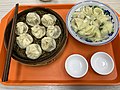 Xiaolongbao
 -
 Xiaolongbao
 -
 Xiaolongbao
 -
 Xiaolongbao
 -
 Xiaolongbao


.jpg)


.jpg)

