Tea Horse Road: Difference between revisions
CSV import |
CSV import |
||
| Line 42: | Line 42: | ||
* [http://www.historyofteainchina.com History of Tea in China] | * [http://www.historyofteainchina.com History of Tea in China] | ||
{{dictionary-stub1}} | {{dictionary-stub1}} | ||
== Tea_Horse_Road == | |||
<gallery> | |||
File:Map_of_the_Tea-Horse_road.png|Tea_Horse_Road | |||
File:Men_Laden_With_Tea,_Sichuan_Sheng,_China_1908_Ernest_H._Wilson_RESTORED.jpg|Men Laden With Tea, Sichuan Sheng, China 1908 | |||
File:茶马古道平乐骑龙山古道照片.jpg|Tea_Horse_Road | |||
File:茶马古道平乐段国保碑.jpg|Tea_Horse_Road | |||
File:茶马古道天台山段.jpg|Tea_Horse_Road | |||
File:茶马古道天台山段国保碑.jpg|Tea_Horse_Road | |||
File:茶马古道龚店段.jpg|Tea_Horse_Road | |||
File:茶马古道邛崃夹关国保碑.jpg|Tea_Horse_Road | |||
File:茶马古道油榨古火井遗址照片.jpg|Tea_Horse_Road | |||
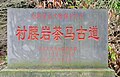
File:衬腰岩茶马古道照片.jpg|Tea_Horse_Road | |||
File:衬腰岩茶马古道国保碑.jpg|Tea_Horse_Road | |||
File:茶马古道龙池段.jpg|Tea_Horse_Road | |||
</gallery> | |||
Revision as of 11:37, 18 February 2025
Introduction
The Tea Horse Road or Chamadao, was a network of caravan paths winding through the mountains of Sichuan, Yunnan and Tibet in Southwest China. It was a significant trade route for exchanging tea from China and horses from Tibet.
History
The Tea Horse Road has a history of more than a thousand years. It was not only an important route for the exchange of goods, but also a corridor for cultural exchange between the Han Chinese, Tibetan, and other ethnic groups in the region.
Route
The Tea Horse Road began in Sichuan and Yunnan provinces, where tea was produced, and ended in Tibet, where horses were bred. The road passed through some of the most rugged and inhospitable terrain on earth, including the treacherous Hengduan Mountains.
Trade
The main goods traded along the Tea Horse Road were tea and horses, hence the name. However, other goods were also traded, including salt, medicine, and silk. The trade of tea and horses was crucial for the economies of Sichuan, Yunnan, and Tibet.
Cultural Exchange
The Tea Horse Road was not only a trade route, but also a corridor for cultural exchange. It played a significant role in spreading Buddhism in the region. The road also facilitated the spread of the Tibetan script, art, and music.
Decline and Legacy
With the advent of modern transportation methods in the 20th century, the Tea Horse Road gradually fell into disuse. However, its legacy lives on in the unique blend of cultures found in the region today. The road is also a popular tourist attraction, with many visitors drawn to its historical significance and stunning natural beauty.
See Also
References
- Tea Horse Road: China's Ancient Trade Road to Tibet
- The Ancient Tea Horse Road
- The Tea Horse Road: 1,000 Years of Trade and Cultural Exchange
External Links

Tea_Horse_Road
-
 Tea_Horse_Road
 -
 Men Laden With Tea, Sichuan Sheng, China 1908
 -
 Tea_Horse_Road
 -
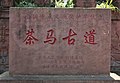 Tea_Horse_Road
 -
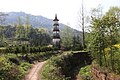 Tea_Horse_Road
 -
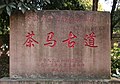 Tea_Horse_Road
 -
 Tea_Horse_Road
 -
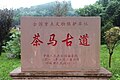 Tea_Horse_Road
 -
 Tea_Horse_Road
 -
 Tea_Horse_Road
 -
 Tea_Horse_Road
 -
 Tea_Horse_Road


