Third place: Difference between revisions
CSV import |
CSV import Tags: mobile edit mobile web edit |
||
| Line 22: | Line 22: | ||
[[Category:Sociology]] | [[Category:Sociology]] | ||
{{sociology-stub}} | {{sociology-stub}} | ||
<gallery> | |||
File:Barbearia.jpg|Third_place | |||
File:The_Ancient_Agora_of_Athens_from_Polygnotou_Street_in_Plaka_on_May_31,_2020.jpg|Third_place | |||
File:Central_Perk_(Burbank)_in_July_2023.jpg|Third_place | |||
File:Jongensbinnenplaats_nu.jpg|Third_place | |||
File:Yoyogi_Park_5_30_weekend_after_state_of_emergency_lifted_in_Tokyo_(49952811147).jpg|Third_place | |||
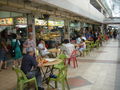
File:CoffeeShopSG.JPG|Third_place | |||
File:Bowling_in_North_Korea.jpg|Third_place | |||
</gallery> | |||
Latest revision as of 11:36, 18 February 2025
Third place refers to social surroundings separate from the two usual social environments of home (first place) and the workplace (second place). Coined by urban sociologist Ray Oldenburg in his book The Great Good Place (1989), the concept of third places focuses on the importance of informal public gathering places for a thriving community. Third places, such as cafes, parks, community centers, and libraries, are essential for social interaction, civic engagement, and fostering broader, more creative interaction among community members.
Characteristics[edit]
Third places are characterized by several key features that distinguish them from other social settings. They are typically easily accessible, involve regulars – people who habitually congregate there – and are welcoming and comfortable. These environments foster a sense of belonging and are crucial for forming the social fabric of a community. They are neutral grounds where individuals can meet on equal terms, regardless of their social status outside the third place.
Importance[edit]
The concept of third places highlights the significant role these spaces play in community building and in the health of individual social lives. They serve as anchors of community life and facilitate and foster broader, more creative interaction. In a society where people are increasingly isolated, third places offer a space for face-to-face interaction, which is essential for personal well-being and the strengthening of community bonds.
Examples[edit]
Examples of third places include, but are not limited to, cafes, pubs, bookstores, parks, and community gardens. These spaces provide a backdrop for social interaction, informal gatherings, and the exchange of ideas. They are places where people can relax, share experiences, and build relationships outside of structured settings like work or home.
Challenges and Opportunities[edit]
In the digital age, the concept of third places extends beyond physical locations to include virtual spaces, such as online forums and social media platforms. However, the challenge remains to ensure these virtual third places provide the same level of interpersonal interaction and community building as their physical counterparts. Urban planning and community development efforts increasingly recognize the importance of designing and maintaining third places to foster a sense of community and belonging among residents.
See Also[edit]

-
 Third_place
 -
 Third_place
 -
 Third_place
 -
 Third_place
 -
 Third_place
 -
 Third_place
 -
 Third_place


_in_July_2023.jpg)

.jpg)


