Water efficiency: Difference between revisions
CSV import |
CSV import |
||
| Line 37: | Line 37: | ||
{{environment-stub}} | {{environment-stub}} | ||
<gallery> | |||
File:Chilled_Water_Efficiency_(28471938834).jpg|Chilled Water Efficiency | |||
File:Choose_WaterSense_(13587197363).jpg|Choose WaterSense | |||
File:Dusche-cut-w025-h025.jpg|Water Efficiency | |||
File:Watercyclesummary.jpg|Water Cycle Summary | |||
File:Earth_water_distribution_ppm_chart.svg|Earth Water Distribution PPM Chart | |||
File:Water-conservation-stamp-1960.jpg|Water Conservation Stamp 1960 | |||
File:Water_Pollution_with_Trash_Disposal_of_Waste_at_the_Garbage_Beach.jpg|Water Pollution with Trash Disposal of Waste at the Garbage Beach | |||
</gallery> | |||
Latest revision as of 11:36, 18 February 2025
Water efficiency refers to the practice of using water resources in a sustainable and efficient manner, aiming to reduce water waste and ensure that water is used effectively for its intended purposes. This concept is crucial in both domestic and industrial settings, as well as in agriculture, where water is a critical resource for production. Water efficiency encompasses a wide range of practices, technologies, and strategies designed to minimize water use and maximize the utility derived from each unit of water consumed.
Overview[edit]
Water efficiency is an essential aspect of sustainable development and environmental management. It involves optimizing water use to reduce unnecessary waste, thereby conserving water for future generations and reducing the environmental impact associated with water extraction, treatment, and disposal. Efficient water use is particularly important in regions facing water scarcity, but it is also relevant in areas with abundant water resources to prevent complacency and ensure sustainability.
Strategies for Improving Water Efficiency[edit]
Several strategies can be employed to improve water efficiency, including:
- Water-Saving Technologies: The adoption of water-saving technologies in households, industries, and agriculture can significantly reduce water consumption. Examples include low-flow faucets, efficient irrigation systems, and water-efficient appliances.
- Water Recycling and Reuse: Treating and reusing wastewater for non-potable purposes, such as irrigation and industrial processes, can decrease the demand for fresh water.
- Leak Detection and Repair: Identifying and fixing leaks in water distribution systems can prevent significant water loss.
- Water Conservation Policies: Governments and organizations can implement policies and regulations that encourage or mandate water conservation practices.
- Public Awareness and Education: Educating the public about the importance of water conservation and efficient use can lead to behavioral changes that contribute to water efficiency.
Benefits of Water Efficiency[edit]
Improving water efficiency has numerous benefits, including:
- Reducing Water Scarcity: Efficient water use can alleviate water scarcity by stretching existing water supplies further.
- Environmental Protection: By reducing the need for water extraction and treatment, water efficiency can lessen the impact on natural ecosystems and decrease energy consumption associated with water services.
- Economic Savings: Both consumers and utilities can save money through reduced water consumption and lower energy bills due to decreased demand for water heating and treatment.
- Enhanced Water Security: Efficient water use contributes to water security by ensuring that sufficient water is available to meet the needs of people, agriculture, and industry.
Challenges to Water Efficiency[edit]
Despite its benefits, there are challenges to achieving water efficiency, including:
- Economic and Financial Barriers: The initial cost of implementing water-efficient technologies and infrastructure can be high.
- Lack of Awareness: There may be a lack of awareness or understanding of water efficiency benefits and practices among the public and policymakers.
- Policy and Regulatory Hurdles: Inadequate policies or regulations can impede the adoption of water-efficient practices and technologies.
- Cultural and Behavioral Factors: Changing established water use habits and cultural norms can be difficult.
Conclusion[edit]
Water efficiency is a critical component of sustainable water management and environmental stewardship. By adopting efficient water use practices and technologies, societies can ensure the availability of water resources for future generations, protect the environment, and realize economic benefits. Achieving water efficiency requires concerted efforts from individuals, businesses, and governments, as well as a commitment to overcoming the challenges associated with changing water use behaviors and investing in efficient technologies.

This article is a environment-related stub. You can help WikiMD by expanding it!
-
 Chilled Water Efficiency
 -
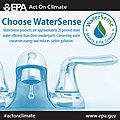 Choose WaterSense
 -
 Water Efficiency
 -
 Water Cycle Summary
 -
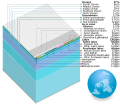 Earth Water Distribution PPM Chart
 -
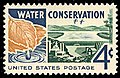 Water Conservation Stamp 1960
 -
 Water Pollution with Trash Disposal of Waste at the Garbage Beach
.jpg)
.jpg)


