Traditional balsamic vinegar: Difference between revisions
CSV import |
CSV import |
||
| Line 39: | Line 39: | ||
[[Category:Vinegar]] | [[Category:Vinegar]] | ||
[[Category:Emilia-Romagna]] | [[Category:Emilia-Romagna]] | ||
== Traditional_balsamic_vinegar == | |||
<gallery> | |||
File:Barrels_vinegar.jpg|Barrels of vinegar aging | |||
File:Traditional_Balsamic_Vinegars_of_Modena_(right)_and_Reggio_Emilia_(left).jpg|Traditional Balsamic Vinegars of Modena (right) and Reggio Emilia (left) | |||
File:Batteria-intera.JPG|Batteria of barrels used for aging balsamic vinegar | |||
File:VPC-refilling.jpg|Refilling the vinegar barrels | |||
File:TBV-agelimit.jpg|Age limit for traditional balsamic vinegar | |||
File:barrelset_config.png|Configuration of barrel set for aging | |||
File:age_vs_evap_vs_withdrawn.png|Age vs evaporation vs withdrawn volume | |||
</gallery> | |||
Latest revision as of 11:31, 18 February 2025
Aged Italian vinegar from Modena and Reggio Emilia
Traditional balsamic vinegar is a type of aged vinegar produced in the Emilia-Romagna region of Italy, specifically in the provinces of Modena and Reggio Emilia. Unlike regular balsamic vinegar, traditional balsamic vinegar is made from grape must and aged for a minimum of 12 years in a series of wooden barrels.
Production[edit]
The production of traditional balsamic vinegar begins with the cooking of grape must, which is the freshly crushed juice that contains the skins, seeds, and stems of the fruit. The must is cooked slowly until it is reduced by about half, concentrating the sugars and flavors. This cooked must is then fermented and aged in a series of barrels made from different types of wood, such as oak, chestnut, cherry, and juniper.

The aging process involves transferring the vinegar through a series of barrels, known as a "batteria," each smaller than the last. This process allows the vinegar to develop its complex flavors and aromas over time. The barrels are stored in attics, where the temperature and humidity variations contribute to the aging process.

Certification and Quality[edit]
Traditional balsamic vinegar is protected by European Union Protected Designation of Origin (PDO) status, which ensures that only vinegar produced in Modena and Reggio Emilia using traditional methods can be labeled as "Aceto Balsamico Tradizionale." The vinegar is subject to strict quality controls and is evaluated by a panel of expert tasters before it can be bottled and sold.
_and_Reggio_Emilia_(left).jpg)
Aging and Flavor[edit]
Traditional balsamic vinegar is aged for a minimum of 12 years, with some varieties aged for 25 years or more. The aging process results in a thick, dark, and rich vinegar with a complex flavor profile that includes notes of wood, fruit, and caramel.

Uses[edit]
Traditional balsamic vinegar is used as a condiment and is often drizzled over dishes such as salads, grilled meats, and cheeses. It can also be used to enhance the flavor of desserts, such as strawberries or ice cream.
Related pages[edit]
References[edit]
- "Traditional Balsamic Vinegar of Modena." Consorzio Tutela Aceto Balsamico Tradizionale di Modena. Accessed October 2023.
- "Traditional Balsamic Vinegar of Reggio Emilia." Consorzio Tutela Aceto Balsamico Tradizionale di Reggio Emilia. Accessed October 2023.
Traditional_balsamic_vinegar[edit]
-
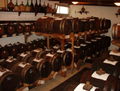 Barrels of vinegar aging
 -
 Traditional Balsamic Vinegars of Modena (right) and Reggio Emilia (left)
 -
 Batteria of barrels used for aging balsamic vinegar
 -
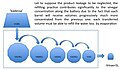 Refilling the vinegar barrels
 -
 Age limit for traditional balsamic vinegar
 -
 Configuration of barrel set for aging
 -
 Age vs evaporation vs withdrawn volume


