Spermacoce: Difference between revisions
CSV import Tags: mobile edit mobile web edit |
CSV import |
||
| Line 39: | Line 39: | ||
{{Rubiaceae-stub}} | {{Rubiaceae-stub}} | ||
{{medicine-stub}} | {{medicine-stub}} | ||
<gallery> | |||
File:Spermacoce_ocymoides_W_IMG_2964.jpg|Spermacoce ocymoides | |||
File:Spermacoce_articularis_(S_hispida-_Madanghanti)_in_Hyderabad,_AP_W2_IMG_9064.jpg|Spermacoce articularis (S. hispida - Madanghanti) in Hyderabad | |||
File:Spermacoce_terminalis.jpg|Spermacoce terminalis | |||
File:Spermacoce_ocymoides_W_IMG_2966.jpg|Spermacoce ocymoides | |||
File:Spermacoce_pusilla_(Tiny_False_Buttonweed)_in_Hyderabad,_AP_W_IMG_0005.jpg|Spermacoce pusilla (Tiny False Buttonweed) in Hyderabad | |||
</gallery> | |||
Latest revision as of 11:28, 18 February 2025
Spermacoce is a genus of flowering plants in the family Rubiaceae, commonly known as false buttons due to their small, button-like flowers. This genus is widely distributed across tropical and subtropical regions worldwide, including Africa, Asia, Australia, and the Americas. The plants belonging to this genus are diverse in their habitats, ranging from grasslands and forests to disturbed sites and agricultural lands.
Description[edit]
Species within the Spermacoce genus are typically herbaceous plants or small shrubs. They possess small, lanceolate to ovate leaves arranged oppositely along the stems. The flowers are small, with four petals, often white, pink, or purple, and are clustered in dense inflorescences. The fruit is a small capsule containing several seeds, which are dispersed by various means, including wind and water, as well as through attachment to animals.
Ecology[edit]
Spermacoce species play a significant role in their ecosystems. They are important sources of nectar for a variety of pollinators, including bees, butterflies, and other insects. Some species are considered weeds in agricultural settings, where they can compete with crops for resources. However, they can also contribute to the biodiversity of agricultural landscapes and serve as habitat for beneficial insects.
Medicinal Uses[edit]
Several Spermacoce species have been used in traditional medicine across different cultures. They are known for their anti-inflammatory, antimicrobial, and analgesic properties. Extracts from the plants have been used to treat a variety of ailments, including wounds, skin infections, and fevers. Research into the pharmacological properties of Spermacoce species is ongoing, with studies focusing on their potential as sources of new drugs.
Conservation[edit]
While many Spermacoce species are common and not considered at risk, habitat destruction and overharvesting for medicinal use have led to declines in some populations. Conservation efforts are necessary to ensure the sustainability of these species, particularly those that are endemic to limited areas.
Classification[edit]
The Spermacoce genus belongs to the family Rubiaceae, which is known for its economic and medicinal importance. Within the genus, species are classified based on morphological characteristics such as leaf shape, flower structure, and fruit type. Ongoing genetic research is helping to clarify the relationships between different Spermacoce species and other genera within the Rubiaceae family.
Selected Species[edit]
- Spermacoce articularis
- Spermacoce verticillata
- Spermacoce remota
- Spermacoce assurgens
See Also[edit]
References[edit]
<references/>

-
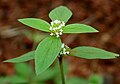 Spermacoce ocymoides
 -
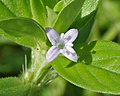 Spermacoce articularis (S. hispida - Madanghanti) in Hyderabad
 -
 Spermacoce terminalis
 -
 Spermacoce ocymoides
 -
 Spermacoce pusilla (Tiny False Buttonweed) in Hyderabad

_in_Hyderabad,_AP_W2_IMG_9064.jpg)


_in_Hyderabad,_AP_W_IMG_0005.jpg)

