Hill reaction: Difference between revisions
CSV import |
CSV import |
||
| Line 22: | Line 22: | ||
[[Category:Rheumatology]] | [[Category:Rheumatology]] | ||
{{Medicine-stub}} | {{Medicine-stub}} | ||
<gallery> | |||
File:Plagiomnium_affine_laminazellen.jpeg|Hill_reaction | |||
File:Thylakoid_membrane_3.svg|Hill_reaction | |||
File:Hill_reaction_1.png|Hill_reaction | |||
File:Hill_reaction_2.png|Hill_reaction | |||
File:Hill_reaction_3.png|Hill_reaction | |||
File:Hill_reaction_4.png|Hill_reaction | |||
File:DCPIP.png|Hill_reaction | |||
File:Chloroplast.jpeg|Hill_reaction | |||
</gallery> | |||
Latest revision as of 11:28, 18 February 2025
Higouménakis' Sign is a clinical sign often associated with congenital syphilis. It is named after the Greek physician George Higouménakis who first described it in 1927.
Definition[edit]
Higouménakis' Sign is characterized by the unilateral enlargement of the sternoclavicular joint. This enlargement is typically painless and is most commonly observed in patients with late congenital syphilis. However, it can also be seen in other conditions such as Marfan syndrome and Ehlers-Danlos syndrome.
Clinical Significance[edit]
The presence of Higouménakis' Sign is a strong indicator of congenital syphilis, particularly in its late stages. It is one of the many signs that physicians look for when diagnosing this condition. However, it is not exclusive to syphilis and can be seen in other conditions, making differential diagnosis important.
Diagnosis[edit]
The diagnosis of Higouménakis' Sign is primarily clinical, based on the physical examination of the patient. The physician will look for a unilateral enlargement of the sternoclavicular joint. Additional tests may be required to confirm the diagnosis of congenital syphilis, including serologic testing and dark-field microscopy.
Treatment[edit]
The treatment for Higouménakis' Sign involves addressing the underlying cause. In the case of congenital syphilis, this typically involves a course of antibiotics, most commonly penicillin. In other conditions, treatment may involve physical therapy, surgery, or other interventions.
See Also[edit]

-
 Hill_reaction
 -
 Hill_reaction
 -
 Hill_reaction
 -
 Hill_reaction
 -
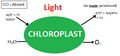 Hill_reaction
 -
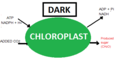 Hill_reaction
 -
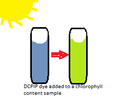 Hill_reaction
 -
 Hill_reaction


