Extreme environment: Difference between revisions
CSV import |
CSV import |
||
| Line 38: | Line 38: | ||
{{Environment-stub}} | {{Environment-stub}} | ||
<gallery> | |||
File:The_Different_Types_of_Animals_.jpg|Extreme_environment | |||
File:Everest_kalapatthar_crop.jpg|Mount Everest from Kala Patthar | |||
File:Libya_5230_Wan_Caza_Dunes_Luca_Galuzzi_2007.jpg|Dunes in Libya | |||
File:Top_of_Atmosphere.jpg|Top of the Atmosphere | |||
File:MtCleveland_ISS013-E-24184.jpg|Mount Cleveland from ISS | |||
File:Blacksmoker_in_Atlantic_Ocean.jpg|Black smoker in the Atlantic Ocean | |||
File:DeadSeaIsrael.jpg|Dead Sea in Israel | |||
</gallery> | |||
Latest revision as of 11:18, 18 February 2025
Extreme environments are conditions that are challenging for most forms of life to survive. These environments can be characterized by extremes of temperature, pressure, radiation, or chemical composition. Life forms that thrive in these conditions are known as extremophiles. Understanding extreme environments is crucial for various scientific fields, including astrobiology, environmental science, and biotechnology.
Characteristics[edit]
Extreme environments are defined by parameters that deviate significantly from the conditions that are commonly considered comfortable or even survivable for humans and most life forms. These include:
- High temperatures: Environments such as hydrothermal vents and hot springs can exceed 100°C.
- Low temperatures: Locations like the Antarctic or the deep sea can have temperatures well below 0°C.
- High pressure: The deep sea, especially the Mariana Trench, experiences pressures hundreds of times higher than the Earth's atmosphere.
- High radiation: Areas such as the Chernobyl Exclusion Zone or outer space expose organisms to levels of radiation that can damage DNA.
- Acidity/Alkalinity: Some environments have extreme pH levels, such as the acidic sulfur springs or the alkaline soda lakes.
- Salinity: Places like the Dead Sea have very high salt concentrations, which can be inhospitable to most life forms.
Adaptations[edit]
Organisms that live in extreme environments have developed unique adaptations to survive. These adaptations can be physiological, such as the production of antifreeze proteins in Antarctic fish, or biochemical, such as the use of specialized enzymes by thermophiles that remain active at high temperatures. Other adaptations include changes in membrane composition to withstand high pressures or the use of pigments to protect against radiation.
Research and Applications[edit]
Studying extreme environments and their inhabitants provides insights into the limits of life on Earth and informs the search for life in the universe. It also has practical applications in biotechnology, such as the use of extremophile enzymes in industrial processes that require extreme conditions.
Astrobiology[edit]
In astrobiology, extreme environments on Earth are studied as analogs for conditions on other planets and moons. For example, the study of microbes in the high radiation environment of Chernobyl can offer clues about the potential for life to withstand the radiation on the surface of Mars.
Environmental Science[edit]
In environmental science, understanding how life adapts to extreme conditions can help in the development of strategies for the restoration of environments damaged by pollution, climate change, or other factors.
Biotechnology[edit]
The enzymes and other molecules produced by extremophiles have applications in biotechnology, including in the pharmaceutical, chemical, and biofuel industries. For example, the polymerase enzyme from the thermophilic bacterium Thermus aquaticus is used in the polymerase chain reaction (PCR) technique, a fundamental process in molecular biology.
See Also[edit]

This article is a environment-related stub. You can help WikiMD by expanding it!
-
 Extreme_environment
 -
 Mount Everest from Kala Patthar
 -
 Dunes in Libya
 -
 Top of the Atmosphere
 -
 Mount Cleveland from ISS
 -
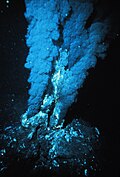 Black smoker in the Atlantic Ocean
 -
 Dead Sea in Israel


