Mother of vinegar: Difference between revisions
CSV import |
CSV import |
||
| Line 29: | Line 29: | ||
[[Category:Fermentation]] | [[Category:Fermentation]] | ||
[[Category:Vinegar]] | [[Category:Vinegar]] | ||
<gallery> | |||
File:Mother_of_vinegar.png|Mother of vinegar | |||
File:Vinegar.mother.jpg|Mother of vinegar | |||
File:Mère-de-vinaigre.jpg|Mother of vinegar | |||
File:Mycoderma_aceti_in_vinegar._Wellcome_M0008824.jpg|Mycoderma aceti in vinegar | |||
File:Vinegar_with_the_mother.jpg|Vinegar with the mother | |||
File:Kombucha_culture.jpg|Kombucha culture | |||
File:Essigmutter_von_apfelessig.jpg|Essigmutter von Apfelessig | |||
</gallery> | |||
Latest revision as of 11:16, 18 February 2025
Mother of Vinegar
The Mother of Vinegar is a substance composed of a form of cellulose and acetic acid bacteria that develops on fermenting alcoholic liquids, which turns alcohol into acetic acid with the help of oxygen from the air. It is added to wine, cider, or other alcoholic liquids to produce vinegar.
Formation and Composition[edit]
The Mother of Vinegar is formed from the fermentation of ethanol by acetic acid bacteria. The bacteria are usually present in the environment, but can also be added intentionally for vinegar production. The bacteria consume the ethanol and convert it into acetic acid, forming a gelatinous substance in the process. This substance, known as the Mother of Vinegar, consists of various bacteria and cellulose.
Uses[edit]
The Mother of Vinegar is used in the production of vinegar. It can be added to alcoholic liquids to start the fermentation process. The Mother of Vinegar can also be used to make homemade vinegar by adding it to wine or cider and allowing it to ferment.
Health Benefits[edit]
Some people consume the Mother of Vinegar for its potential health benefits. It is believed to have probiotic properties due to the presence of beneficial bacteria. However, more research is needed to confirm these potential health benefits.
See Also[edit]
External Links[edit]
-
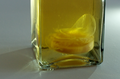 Mother of vinegar
 -
 Mother of vinegar
 -
 Mother of vinegar
 -
 Mycoderma aceti in vinegar
 -
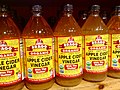 Vinegar with the mother
 -
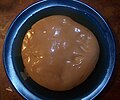 Kombucha culture
 -
 Essigmutter von Apfelessig


