Golding Bird: Difference between revisions
CSV import Tags: mobile edit mobile web edit |
CSV import |
||
| Line 30: | Line 30: | ||
[[Category:Electrotherapy]] | [[Category:Electrotherapy]] | ||
{{medicine-stub}} | {{medicine-stub}} | ||
<gallery> | |||
File:Golding_Bird_gold_medal.jpg|Golding Bird gold medal | |||
File:Electrostatic_friction_machines.jpg|Electrostatic friction machines | |||
File:Duchenne_Mecanisme_de_la_physionomie_humaine,_fig._78.jpg|Duchenne Mecanisme de la physionomie humaine, fig. 78 | |||
File:Pulvermacher_chain.jpg|Pulvermacher chain | |||
File:Uric_acid_crystals.jpg|Uric acid crystals | |||
File:Bird_stethoscope.jpg|Bird stethoscope | |||
</gallery> | |||
Latest revision as of 11:10, 18 February 2025
Golding Bird (9 December 1815 – 27 October 1854) was a British medical doctor and a pioneer in the field of electrotherapy and urinalysis. Born in Downham, Norfolk, England, Bird became an influential figure in the development of medical electricity and chemical pathology in the 19th century. Despite facing health challenges from a young age, Bird's contributions to medicine, particularly in the diagnosis and treatment of kidney diseases, have left a lasting legacy.
Early Life and Education[edit]
Golding Bird was born into a family with a strong medical background. His early education was hampered by poor health, specifically a spinal condition that would affect him throughout his life. Despite these challenges, Bird developed a keen interest in chemistry and natural sciences. He pursued his medical education at Guy's Hospital in London, where he was greatly influenced by the teachings of Thomas Addison and Richard Bright, two prominent figures in the field of medicine at the time.
Career[edit]
Bird's career at Guy's Hospital began in earnest after he completed his medical studies. He was appointed as a lecturer in medical jurisprudence at the age of 25 and later held the position of assistant physician, where he focused on the chemical aspects of disease. Bird's interest in electrotherapy led him to experiment with various forms of electrical treatment, and he became one of the early adopters of electrical stimulation for therapeutic purposes.
In addition to his work in electrotherapy, Bird made significant contributions to the field of urinalysis. He was among the first to apply chemical analysis to the study of urine, aiding in the diagnosis of kidney and other metabolic diseases. His book, "Urinary Deposits," published in 1844, became a seminal work in the field and established him as a leading authority on kidney diseases.
Contributions and Legacy[edit]
Golding Bird's contributions to medicine were not limited to his clinical practice. He was a prolific writer, contributing numerous articles to medical journals and authoring several influential books. His work in electrotherapy and urinalysis paved the way for future advancements in these fields.
Bird's health continued to deteriorate due to his chronic spinal condition, leading to his early retirement from Guy's Hospital in 1853. He died a year later at the age of 38. Despite his short life, Bird's impact on medicine, particularly in the diagnosis and treatment of renal diseases, remains significant. His innovative approach to medical treatment and diagnosis, combining chemical analysis with clinical observation, set new standards in medical practice.
Selected Works[edit]
- Urinary Deposits: Their Diagnosis, Pathology, and Therapeutical Indications (1844)
- Elements of Natural Philosophy (1848)
See Also[edit]

-
Golding Bird gold medal
-
 Electrostatic friction machines
 -
 Duchenne Mecanisme de la physionomie humaine, fig. 78
 -
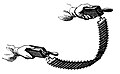 Pulvermacher chain
 -
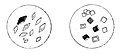 Uric acid crystals
 -
 Bird stethoscope


