Kaikō ROV: Difference between revisions
CSV import |
CSV import |
||
| Line 19: | Line 19: | ||
{{Japan-stub}} | {{Japan-stub}} | ||
{{Ocean-stub}} | {{Ocean-stub}} | ||
<gallery> | |||
File:Flag_of_Japan.svg|Flag of Japan | |||
File:Marianatrenchmap.png|Map of the Mariana Trench | |||
File:JAMSTEC_Deep_Sea_Research_Ship_Kairei.jpg|JAMSTEC Deep Sea Research Ship Kairei | |||
File:JAMSTEC_Kairei_control_room.jpg|JAMSTEC Kairei Control Room | |||
File:JAMSTEC_Deep_Sea_ROV_kaikou7000.jpg|JAMSTEC Deep Sea ROV Kaikō 7000 | |||
File:AMSTEC_Deep_Sea_ROV_kaikou7000_Vehicle.jpg|JAMSTEC Deep Sea ROV Kaikō 7000 Vehicle | |||
File:Hirondellea_gigas.jpg|Hirondellea gigas | |||
</gallery> | |||
Latest revision as of 11:03, 18 February 2025
Kaikō ROV (Remotely Operated Vehicle) was a Japanese deep-sea research vehicle that was designed and built by the Japan Agency for Marine-Earth Science and Technology (JAMSTEC). It was one of the most advanced deep-sea exploration vehicles of its time, capable of reaching depths of up to 11,000 meters.
History[edit]
Kaikō ROV was launched in 1995 and was primarily used for deep-sea exploration and research. It was the first vehicle to reach the bottom of the Challenger Deep, the deepest part of the Mariana Trench, in 1995. The vehicle was lost at sea during a typhoon in 2003, but a replacement vehicle, Kaikō7000II, was launched in 2007.
Design and Capabilities[edit]
Kaikō ROV was designed to withstand the extreme pressures found at the bottom of the ocean. It was equipped with a variety of scientific instruments, including a manipulator arm for collecting samples, cameras for capturing high-resolution images, and sensors for measuring temperature, pressure, and other environmental conditions.
The vehicle was remotely operated from a surface ship, allowing scientists to explore the deep sea without the risks associated with manned submersibles. The data collected by Kaikō ROV has contributed to our understanding of deep-sea ecosystems and the geological processes that shape the ocean floor.
Legacy[edit]
Despite its loss, Kaikō ROV left a significant legacy in the field of deep-sea exploration. It was the first vehicle to reach the deepest part of the ocean, a feat that was not repeated until 2012 by the Deepsea Challenger, piloted by filmmaker James Cameron. The data collected by Kaikō ROV continues to be used by scientists around the world, contributing to our understanding of the deep sea and its inhabitants.


This article is a oceanography stub. You can help WikiMD by expanding it!
-
 Flag of Japan
 -
 Map of the Mariana Trench
 -
 JAMSTEC Deep Sea Research Ship Kairei
 -
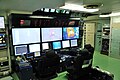 JAMSTEC Kairei Control Room
 -
 JAMSTEC Deep Sea ROV Kaikō 7000
 -
 JAMSTEC Deep Sea ROV Kaikō 7000 Vehicle
 -
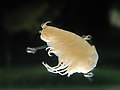 Hirondellea gigas


