Emancipation Proclamation: Difference between revisions
CSV import |
CSV import |
||
| Line 28: | Line 28: | ||
{{stub}} | {{stub}} | ||
{{dictionary-stub1}} | {{dictionary-stub1}} | ||
<gallery> | |||
File:Emancipation_Proclamation_WDL2714.jpg|Emancipation Proclamation | |||
File:Brooklyn_Museum_-_Abraham_Lincoln_-_overall.jpg|Abraham Lincoln | |||
File:Emancipation_Proclamation.PNG|Emancipation Proclamation | |||
File:Emancipation_proclamation.jpg|Emancipation Proclamation | |||
File:Gordon,_scourged_back,_NPG,_1863.jpg|Gordon, scourged back | |||
File:Eastman_Johnson_-_A_Ride_for_Liberty_--_The_Fugitive_Slaves_-_Google_Art_Project.jpg|A Ride for Liberty -- The Fugitive Slaves | |||
File:Emancipation_Proclamation_-_LOC_04067_-_restoration1.jpg|Emancipation Proclamation | |||
File:Men_of_Color_Civil_War_Recruitment_Broadside_1863.png|Men of Color Civil War Recruitment Broadside 1863 | |||
File:Am_Arch_Sculpt_4.jpg|Emancipation Proclamation | |||
File:SlaveChildrenUnknown.jpg|Emancipation Proclamation | |||
File:Scene_Along_the_Route.jpg|Emancipation Proclamation | |||
File:A_Visit_from_the_Old_Mistress.jpg|A Visit from the Old Mistress | |||
</gallery> | |||
Latest revision as of 11:02, 18 February 2025
Emancipation Proclamation is a significant historical document in the United States, issued by President Abraham Lincoln during the American Civil War. It declared that all enslaved people in the Confederate-held territory were to be set free. This did not end slavery in the entire nation but was a significant step towards the abolition of slavery.
Background[edit]
The Emancipation Proclamation was issued on January 1, 1863, during the second year of the American Civil War. It was a presidential proclamation and executive order. The proclamation declared "that all persons held as slaves" within the rebellious states "are, and henceforward shall be free."
Impact[edit]
The Emancipation Proclamation had a significant impact on the Civil War and the future of the United States. It changed the federal legal status of more than 3.5 million enslaved African Americans in the Confederate states from slave to free. It also allowed African Americans to join the Union Army and Navy, providing the Union with a new source of manpower.
Criticism and Controversy[edit]
Despite its significance, the Emancipation Proclamation has been criticized for only freeing slaves in the Confederate-held territories and not in the Union-held territories. It has also been argued that the proclamation did not actually free any slaves, but rather, it was the Union victory in the Civil War that led to the abolition of slavery.
Legacy[edit]
The Emancipation Proclamation is considered a landmark document in American history. It paved the way for the passage of the Thirteenth Amendment, which officially abolished slavery in the United States.
See Also[edit]
References[edit]
<references />
 | |
|---|---|
 |
 |
-
 Emancipation Proclamation
 -
 Abraham Lincoln
 -
 Emancipation Proclamation
 -
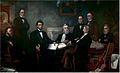 Emancipation Proclamation
 -
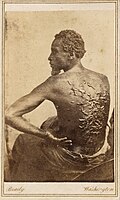 Gordon, scourged back
 -
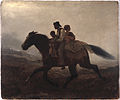 A Ride for Liberty -- The Fugitive Slaves
 -
 Emancipation Proclamation
 -
 Men of Color Civil War Recruitment Broadside 1863
 -
 Emancipation Proclamation
 -
 Emancipation Proclamation
 -
 Emancipation Proclamation
 -
 A Visit from the Old Mistress


