Fungivore: Difference between revisions
CSV import |
CSV import |
||
| Line 28: | Line 28: | ||
[[Category:Organisms by diet]] | [[Category:Organisms by diet]] | ||
{{food-stub}} | {{food-stub}} | ||
<gallery> | |||
File:Slug_-_Lehmannia_nyctelia.jpg|Lehmannia nyctelia | |||
File:Amanita_amerimuscaria_126174.jpg|Amanita amerimuscaria | |||
File:Euprenolepis_procera_feeding.jpg|Euprenolepis procera feeding | |||
File:Monotropastrum_humile.jpg|Monotropastrum humile | |||
File:Xylosandrus_crassiusculus_galleryR.jpg|Xylosandrus crassiusculus gallery | |||
File:Termitomyces_reticulatus_37340.jpg|Termitomyces reticulatus | |||
</gallery> | |||
Latest revision as of 10:59, 18 February 2025
Fungivore
A Fungivore is an organism that consumes fungi. This term is used to describe a wide range of organisms, including certain insects, mammals, and birds. Fungivores play a crucial role in ecosystems, contributing to the decomposition of organic matter and the recycling of nutrients.
Characteristics[edit]
Fungivores are characterized by their diet, which primarily consists of fungi. They have evolved various adaptations to exploit this food source, such as specialized mouthparts in insects and digestive enzymes in mammals and birds that can break down fungal cell walls.
Examples[edit]
Some examples of fungivores include the fungus gnat, which lays its eggs in fungi, and the red squirrel, which eats truffles. Some birds, such as the New Zealand rock wren, are also known to eat fungi.
Ecological role[edit]
Fungivores play a significant role in ecosystems by helping to decompose organic matter and recycle nutrients. They also help to control fungal populations, preventing them from becoming too dominant.
See also[edit]
References[edit]
<references />

-
 Lehmannia nyctelia
 -
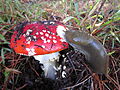 Amanita amerimuscaria
 -
 Euprenolepis procera feeding
 -
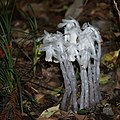 Monotropastrum humile
 -
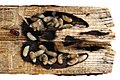 Xylosandrus crassiusculus gallery
 -
 Termitomyces reticulatus


