Manjū: Difference between revisions
CSV import Tags: mobile edit mobile web edit |
CSV import |
||
| Line 29: | Line 29: | ||
{{food-stub}} | {{food-stub}} | ||
{{medicine-stub}} | {{medicine-stub}} | ||
<gallery> | |||
File:Carinto_manjyu.JPG|Manjū | |||
File:Monument_of_birthplace_of_manju_and_udon.jpg|Manjū | |||
File:Manju_001.jpg|Manjū | |||
File:Usukawa_Manjū.JPG|Manjū | |||
File:Momiji_manju_of_Yamadaya_variants.jpg|Manjū | |||
File:Shiose_manju_(2).jpg|Manjū | |||
File:Houraku_Manju.JPG|Manjū | |||
File:Mizumanju_1.JPG|Manjū | |||
File:Rikyū_Manjū_Nakaya,_Hamada.jpg|Manjū | |||
File:Imo-manju_001.jpg|Manjū | |||
File:Kuri_manju_of_Horaiya_(2).jpg|Manjū | |||
</gallery> | |||
Latest revision as of 10:57, 18 February 2025
Manjū is a popular traditional Japanese confectionery that is often enjoyed with tea. It is made from flour, rice powder, and buckwheat, then filled with a sweet paste, typically made from red azuki beans. The name "manjū" is derived from the Japanese word for "fullness," reflecting the satisfying nature of this sweet treat.
History[edit]
The origins of manjū can be traced back to the Heian period, when it was introduced to Japan from China. It was initially a luxury item enjoyed by the nobility, but over time it became a common treat enjoyed by people of all social classes. The method of making manjū has evolved over the centuries, with different regions of Japan developing their own unique variations.
Preparation[edit]
The preparation of manjū involves several steps. First, the dough is made by combining flour, rice powder, and buckwheat. This is then shaped into small balls, which are filled with the sweet red bean paste. The filled dough balls are then steamed until they become soft and fluffy.
Varieties[edit]
There are many different varieties of manjū, each with its own unique characteristics. Some of the most popular include:
- Mame daifuku: This variety is filled with whole red beans and covered in a layer of mochi.
- Kuri manjū: This variety is filled with chestnut paste and is often enjoyed in the autumn.
- Matcha manjū: This variety is flavored with matcha green tea powder, giving it a distinctive green color and a slightly bitter taste.
Cultural Significance[edit]
Manjū holds a significant place in Japanese culture. It is often served during tea ceremonies and is a common gift during holidays and special occasions. It is also a popular snack during the Obon Festival, when it is believed that the spirits of ancestors return to visit their families.
Health Benefits[edit]
While manjū is a sweet treat, it also has some health benefits. The red bean paste is a good source of protein and fiber, and the dough is made from whole grains, which are beneficial for heart health.


-
 Manjū
Manjū -
 Manjū
Manjū -
 Manjū
Manjū -
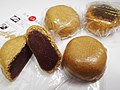 Manjū
Manjū -
Manjū
-
Manjū
-
Manjū
-
Manjū
-
Manjū
-
Manjū
-
Manjū


.jpg)


.jpg)