Climate system: Difference between revisions
CSV import |
CSV import |
||
| Line 41: | Line 41: | ||
{{climate-stub}} | {{climate-stub}} | ||
<gallery> | |||
File:Climate-system.jpg|Climate system overview | |||
File:NASA_depiction_of_earth_global_atmospheric_circulation.jpg|Earth's global atmospheric circulation | |||
File:Carbon_cycle.jpg|Carbon cycle diagram | |||
File:El-nino.png|El Niño phenomenon | |||
File:Msu_1978-2010.jpg|Satellite temperature measurements 1978-2010 | |||
File:20220726_Feedbacks_affecting_global_warming_and_climate_change_-_block_diagram.svg|Feedbacks affecting global warming and climate change | |||
</gallery> | |||
Latest revision as of 10:54, 18 February 2025
Climate System
The climate system encompasses the Earth's atmosphere, hydrosphere, cryosphere, lithosphere, and biosphere, and their interactions. This complex system plays a vital role in determining the Earth's climate and weather patterns. Understanding the climate system is crucial for studying past, present, and future climate changes and their impacts on the environment and human societies.
Components of the Climate System[edit]
The climate system consists of five main components:
- Atmosphere: The layer of gases surrounding the Earth, which is crucial for trapping heat and maintaining the planet's temperature. It also transports heat and moisture around the globe.
- Hydrosphere: All of the Earth's water, including oceans, seas, rivers, lakes, and moisture in the air. The hydrosphere plays a key role in heat distribution through currents and water cycles.
- Cryosphere: The frozen water part of the Earth, including ice caps, glaciers, and sea ice. The cryosphere reflects sunlight and affects global temperature.
- Lithosphere: The Earth's solid outer layer, including the crust and upper mantle. The lithosphere interacts with the atmosphere, hydrosphere, and biosphere through processes like volcanic eruptions and the carbon cycle.
- Biosphere: All of the living organisms on Earth, including plants, animals, and microbes. The biosphere influences and is influenced by the other components of the climate system.
Interactions within the Climate System[edit]
The components of the climate system interact through various processes, including the greenhouse effect, oceanic circulation, and the carbon cycle. These interactions regulate the Earth's climate and lead to natural variability such as El Niño and La Niña events.
- Greenhouse effect: Certain gases in the atmosphere, such as carbon dioxide and methane, trap heat from the sun, warming the Earth. This natural process is essential for life but can be intensified by human activities, leading to global warming.
- Oceanic circulation: Ocean currents distribute heat around the globe. The thermohaline circulation, driven by differences in water temperature and salinity, is a key component of this system.
- Carbon cycle: The movement of carbon between the atmosphere, oceans, biosphere, and lithosphere. This cycle is crucial for regulating the Earth's climate.
Climate Change and the Climate System[edit]
Human activities, particularly the burning of fossil fuels and deforestation, have significantly impacted the climate system. These actions have led to an increase in greenhouse gases in the atmosphere, causing global warming and climate change. The effects of climate change on the climate system include rising sea levels, melting ice caps and glaciers, more extreme weather events, and shifts in ecosystems and biodiversity.
Research and Monitoring[edit]
Scientists study the climate system through observations, satellite data, and climate models. These tools help researchers understand the complex interactions within the climate system and predict future climate changes. Monitoring the climate system is essential for developing strategies to mitigate and adapt to climate change.
See Also[edit]

-
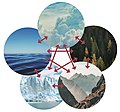 Climate system overview
 -
 Earth's global atmospheric circulation
 -
 Carbon cycle diagram
 -
 El Niño phenomenon
 -
 Satellite temperature measurements 1978-2010
 -
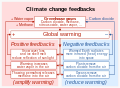 Feedbacks affecting global warming and climate change


