Linguistic prescription: Difference between revisions
CSV import |
CSV import |
||
| Line 23: | Line 23: | ||
[[Category:Language]] | [[Category:Language]] | ||
{{linguistics-stub}} | {{linguistics-stub}} | ||
<gallery> | |||
File:Real_Academia_Española,_Madrid_-_view_2.JPG|Real Academia Española, Madrid | |||
File:Hanzi.svg|Chinese character (Hanzi) | |||
File:Egypt_Hieroglyphe2.jpg|Egyptian hieroglyphs | |||
File:Dr-Johnson.jpg|Dr. Samuel Johnson | |||
</gallery> | |||
Latest revision as of 05:06, 18 February 2025
Linguistic prescription (or prescriptivism) is the practice in sociolinguistics that attempts to lay down rules defining preferred or "correct" use of language. These rules may address such linguistic aspects as spelling, grammar, semantics, pronunciation and syntax. They often have their basis in tradition, perceived correctness, or a desire to maintain the purity of a language.
History[edit]
The concept of linguistic prescription dates back to the ancient Greeks, who were among the first to establish norms for language use. The Romans, too, were known for their prescriptive approach to language, as evidenced by the works of Quintilian and other grammarians.
Prescriptivism vs. Descriptivism[edit]
Linguistic prescription is often contrasted with descriptive linguistics, which observes and records how language is practiced rather than prescribing how it should be used. While prescriptivism focuses on rules and correctness, descriptivism is concerned with language as it is used in real-world contexts.
Criticism[edit]
Critics of linguistic prescription argue that it is arbitrary and stifles creativity and linguistic evolution. They point out that language is constantly changing and evolving, and that attempts to fix it in a certain state are futile.
Examples[edit]
Examples of linguistic prescription include the rules of Académie française, the French language regulator, and the guidelines set out in style guides such as The Chicago Manual of Style and The Elements of Style.
See also[edit]

This article is a linguistics stub. You can help WikiMD by expanding it!
-
 Real Academia Española, Madrid
 -
 Chinese character (Hanzi)
 -
 Egyptian hieroglyphs
 -
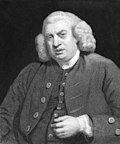 Dr. Samuel Johnson


