Asbestos and the law: Difference between revisions
CSV import Tags: mobile edit mobile web edit |
CSV import |
||
| Line 23: | Line 23: | ||
[[Category:Occupational safety and health]] | [[Category:Occupational safety and health]] | ||
{{cancer-stub}} | {{cancer-stub}} | ||
<gallery> | |||
File:Countries_that_have_banned_asbestos.svg|Countries that have banned asbestos | |||
File:Asbestos_listed_as_Hazardous_Waste.jpg|Asbestos listed as Hazardous Waste | |||
File:Asbestos_warning_label.jpg|Asbestos warning label | |||
File:Unicorn_House,_Durban_Road,_Wynberg.JPG|Unicorn House, Durban Road, Wynberg | |||
File:AsbestosContainment.JPG|Asbestos containment | |||
</gallery> | |||
Latest revision as of 05:06, 18 February 2025
Asbestos and the Law refers to the legal, regulatory, and litigation aspects surrounding the use of asbestos, a group of naturally occurring fibrous minerals that have been widely used in construction, automotive, and other industries due to their durability, fire resistance, and insulating properties. However, asbestos exposure has been linked to serious health issues, including asbestosis, lung cancer, and mesothelioma, a rare and aggressive form of cancer primarily affecting the lining of the lungs or abdomen.
History[edit]
The history of asbestos regulation and litigation can be traced back to the early 20th century when the health risks associated with asbestos exposure began to emerge. Despite early evidence of the dangers, it wasn't until the latter half of the century that significant legal and regulatory measures were implemented. In the United States, the Environmental Protection Agency (EPA) and the Occupational Safety and Health Administration (OSHA) have played key roles in regulating asbestos use and protecting workers and the public from exposure.
Regulation[edit]
In the 1970s and 1980s, governments around the world began to recognize the need for regulation. The EPA issued the Clean Air Act and the Toxic Substances Control Act, which limited the use of asbestos and set standards for exposure. Similarly, OSHA established regulations to protect workers in industries where asbestos exposure was likely. Other countries have enacted their own regulations, with some, like the United Kingdom, implementing a complete ban on asbestos.
Litigation[edit]
Asbestos litigation has become one of the longest and most expensive mass torts in U.S. history. The first asbestos-related lawsuit was filed in 1929, and since then, hundreds of thousands of lawsuits have been filed against manufacturers, employers, and other parties for failing to protect individuals from asbestos exposure. These lawsuits have led to significant verdicts and settlements, with billions of dollars awarded to victims and their families.
Asbestos Trust Funds[edit]
In response to the overwhelming number of lawsuits, many companies that manufactured or used asbestos have established asbestos trust funds to compensate victims. These trust funds are created during the bankruptcy process of the liable companies and are intended to provide compensation to current and future claimants.
Global Perspective[edit]
The approach to regulating asbestos and addressing its health implications varies significantly around the world. While more than 60 countries have banned asbestos, others continue to use it, citing economic and industrial reasons. International efforts, such as those by the World Health Organization (WHO), aim to raise awareness and promote policies to eliminate asbestos-related diseases.
Conclusion[edit]
The complex interplay between the health risks of asbestos, its historical use, and the legal and regulatory responses presents ongoing challenges. As science advances and public awareness grows, the legal landscape continues to evolve, reflecting society's efforts to balance economic interests with the imperative to protect public health.

-
 Countries that have banned asbestos
 -
 Asbestos listed as Hazardous Waste
 -
 Asbestos warning label
 -
 Unicorn House, Durban Road, Wynberg
 -
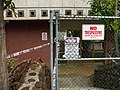 Asbestos containment


