Major histocompatibility complex: Difference between revisions
CSV import Tags: mobile edit mobile web edit |
CSV import Tags: mobile edit mobile web edit |
||
| Line 29: | Line 29: | ||
{{Medicine-stub}} | {{Medicine-stub}} | ||
== Major histocompatibility complex == | |||
<gallery> | |||
File:063-T-CellReceptor-MHC.tiff|T-Cell Receptor and MHC interaction | |||
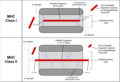
File:MHC_classe_1_i_2.jpg|MHC Class I and II molecules | |||
File:MHC_Class_I_processing.svg|MHC Class I antigen processing | |||
File:MHC_Binding_Diagram.png|MHC Binding Diagram | |||
File:MHC_expression.svg|MHC expression patterns | |||
</gallery> | |||
Latest revision as of 05:00, 18 February 2025
Major Histocompatibility Complex (MHC) is a set of cell surface proteins essential for the acquired immune system to recognize foreign molecules in vertebrates, which in turn determines histocompatibility. The main function of MHC molecules is to bind to antigenic peptides derived from pathogens and display them on the cell surface for recognition by the appropriate T-cells. MHC molecules mediate interactions of leukocytes, also known as white blood cells, which are immune cells that protect the body against antigens.
Structure and Function[edit]
MHC molecules are classified into two main types: Class I and Class II. Class I MHC molecules are present on all nucleated cells and are involved in the presentation of normal self-antigens and foreign antigens to CD8+ T cells. This is crucial for the immune system to recognize and eliminate infected cells. Class II MHC molecules are found on antigen-presenting cells (APCs) such as dendritic cells, macrophages, and B cells. They present antigens to CD4+ T cells, initiating the immune response towards pathogens.
The genes encoding MHC molecules are found in the MHC region, which is one of the most gene-dense areas in the human genome. This region is highly polymorphic, meaning that there are many different allele variants, which helps the immune system to recognize a wide variety of antigens.
Genetic Diversity and Histocompatibility[edit]
The polymorphism in MHC genes is a critical factor in transplantation medicine, as it determines the histocompatibility between donors and recipients. A close match in MHC alleles between the donor and recipient can reduce the risk of transplant rejection. This genetic diversity is also beneficial in population immunity, as it increases the likelihood that some individuals in a population can mount an immune response to a wide range of pathogens.
MHC and Disease Susceptibility[edit]
Variations in MHC genes are associated with susceptibility to various autoimmune diseases and infections. For example, certain alleles of the MHC are linked to increased risk of diseases such as rheumatoid arthritis, type 1 diabetes, and multiple sclerosis. Understanding the role of MHC in disease susceptibility is important for developing strategies for disease prevention and treatment.
MHC in Research and Medicine[edit]
Research on MHC molecules has led to significant advancements in immunology, including the development of vaccines and immunotherapies. The ability to manipulate MHC molecules and their peptide-binding characteristics is crucial in vaccine design, where the goal is to elicit a strong and specific immune response against pathogens. Additionally, MHC molecules are being explored as targets for cancer immunotherapy, with the aim of enhancing the immune system's ability to recognize and destroy cancer cells.
See Also[edit]
References[edit]
<references/>

Major histocompatibility complex[edit]
-
 T-Cell Receptor and MHC interaction
 -
 MHC Class I and II molecules
 -
 MHC Class I antigen processing
 -
 MHC Binding Diagram
 -
 MHC expression patterns


