Thomas Clouston: Difference between revisions
CSV import |
CSV import |
||
| Line 20: | Line 20: | ||
[[Category:1915 deaths]] | [[Category:1915 deaths]] | ||
{{medicine-stub}} | {{medicine-stub}} | ||
<gallery> | |||
File:Thomas_Clouston.jpg|Thomas Clouston | |||
File:Thomas_Smith_Clouston.jpg|Thomas Smith Clouston | |||
File:The_grave_of_Thomas_Clouston,_Dean_Cemetery.jpg|The grave of Thomas Clouston, Dean Cemetery | |||
File:Thomas_Clouston_memorial_in_Kirkwall_Cathedral,_Orkney.jpg|Thomas Clouston memorial in Kirkwall Cathedral, Orkney | |||
</gallery> | |||
Latest revision as of 04:58, 18 February 2025

Thomas Smith Clouston (1840–1915) was a prominent Scottish psychiatrist who made significant contributions to the field of psychiatry in the late 19th and early 20th centuries. He is best known for his work on the classification of mental disorders and his tenure as the Physician Superintendent of the Royal Edinburgh Hospital, where he worked for over 30 years.
Early Life and Education[edit]
Thomas Clouston was born in Caithness, Scotland. He pursued his medical education at the University of Edinburgh, where he graduated with his medical degree. Clouston's interest in psychiatry was influenced by the work of his predecessors and contemporaries in the field of mental health.
Career[edit]
After completing his medical education, Clouston began his career in psychiatry. He was appointed as the Physician Superintendent of the Royal Edinburgh Hospital in 1873, a position he held until his retirement in 1908. During his tenure, Clouston implemented several reforms in the treatment and care of the mentally ill, emphasizing the importance of a humane and scientific approach to psychiatric care. Clouston's work extended beyond the hospital. He was a prolific writer, contributing numerous articles and books on psychiatric topics. His most notable work, "Clinical Lectures on Mental Diseases," was widely regarded as a seminal text in the field of psychiatry. In this book, Clouston classified mental disorders based on their etiology and clinical presentation, a methodology that influenced future classifications of mental illnesses.
Contributions to Psychiatry[edit]
Clouston's contributions to psychiatry were manifold. He was instrumental in advancing the understanding of the biological underpinnings of mental disorders, advocating for the integration of physiological and psychological approaches in psychiatric treatment. Clouston also emphasized the importance of early intervention and the therapeutic value of work and occupation for individuals with mental illness. In addition to his clinical work, Clouston was involved in the education of medical students and mental health professionals. He was a respected lecturer at the University of Edinburgh, where he educated generations of students on the principles of psychiatry.
Legacy[edit]
Thomas Clouston's legacy in psychiatry is marked by his contributions to the understanding and treatment of mental disorders. His work laid the foundation for modern psychiatric practice, particularly in the areas of classification and treatment of mental illnesses. Clouston's humane approach to patient care and his emphasis on the integration of biological and psychological perspectives in psychiatry continue to influence the field today.
See Also[edit]

-
 Thomas Clouston
 -
 Thomas Smith Clouston
 -
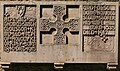 The grave of Thomas Clouston, Dean Cemetery
 -
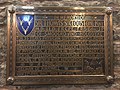 Thomas Clouston memorial in Kirkwall Cathedral, Orkney


