Livestock dehorning: Difference between revisions
CSV import Tags: mobile edit mobile web edit |
CSV import |
||
| Line 38: | Line 38: | ||
{{Veterinary-stub}} | {{Veterinary-stub}} | ||
{{Agriculture-stub}} | {{Agriculture-stub}} | ||
<gallery> | |||
File:Dehorned_dairy_cow.jpg|Dehorned dairy cow | |||
File:COW_ON_A_FARM_NEAR_LEAKEY,_BEING_DE-HORNED._NEAR_SAN_ANTONIO_-_NARA_-_554949.jpg|Cow being dehorned near Leakey | |||
File:COW_ON_A_FARM_NEAR_LEAKEY,_BEING_DE-HORNED._NEAR_SAN_ANTONIO_-_NARA_-_554950.jpg|Cow being dehorned near Leakey | |||
File:Adcock_2023_disbudding_impact.jpg|Disbudding impact | |||
</gallery> | |||
Latest revision as of 04:57, 18 February 2025
Livestock dehorning is a veterinary procedure that involves removing the horns of livestock, primarily cattle, goats, and sheep, to prevent injuries to humans and other animals. This practice is common in areas where animals are closely confined or when animals are raised for meat production, to reduce the risk of injury and improve safety during handling and transport.
Reasons for Dehorning[edit]
Dehorning is performed for several reasons:
- Safety: Horns can cause serious injuries to farm workers, other animals, and the animals themselves.
- Economic: Horned animals require more space during transport, which can increase costs. They also tend to cause more damage to fences, equipment, and each other.
- Management: Dehorned animals are easier to handle and manage, especially in confined spaces.
Methods of Dehorning[edit]
There are various methods of dehorning, depending on the age and species of the animal:
- Chemical Dehorning: Involves applying a caustic substance to the horn buds of very young animals.
- Hot Iron Dehorning: A hot iron is used to burn and destroy the horn-producing cells in calves.
- Dehorning Paste: A caustic paste applied to the horn buds, similar to chemical dehorning.
- Mechanical Dehorning: Involves physically removing the horns using tools such as dehorning saws, guillotine dehorners, or tube dehorners.
- Genetic Dehorning: Breeding polled (naturally hornless) animals to eventually eliminate the need for dehorning.
Welfare Concerns[edit]
Dehorning is a controversial practice due to animal welfare concerns. It can cause pain and distress to animals, leading to calls for pain management and anesthesia during the procedure. Some countries have regulations requiring pain relief during dehorning.
Alternatives to Dehorning[edit]
Alternatives to dehorning include:
- Breeding Polled Animals: Selectively breeding for naturally hornless animals.
- Tip Trimming: Regularly trimming the tips of the horns to prevent injury without removing the entire horn.
- Use of Protective Devices: Applying devices that cover the horns to prevent injury.
Regulations and Guidelines[edit]
Regulations and guidelines on dehorning vary by country and region. They may include age restrictions, requirements for pain management, and qualifications for those performing the procedure.
See Also[edit]
This veterinary-related article is a stub. You can help WikiMD by expanding it.

This article is a agriculture stub. You can help WikiMD by expanding it!
-
 Dehorned dairy cow
 -
 Cow being dehorned near Leakey
 -
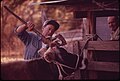 Cow being dehorned near Leakey
 -
 Disbudding impact


