Hjalmar and Ingeborg: Difference between revisions
CSV import |
CSV import |
||
| Line 24: | Line 24: | ||
{{Myth-stub}} | {{Myth-stub}} | ||
<gallery> | |||
File:Hjalmar_friar_till_Ingeborg_by_Hugo_Hamilton.jpg|Hjalmar friar till Ingeborg by Hugo Hamilton | |||
File:Hjalmars_avsked_av_Orvar_Odd_efter_striden_på_Samsö.jpg|Hjalmars avsked av Orvar Odd efter striden på Samsö | |||
File:Orvarodd.jpg|Orvarodd | |||
File:Ingeborg_(1857)_by_H._W._Bissen_(angle).jpg|Ingeborg (1857) by H. W. Bissen | |||
</gallery> | |||
Latest revision as of 04:54, 18 February 2025
Hjalmar and Ingeborg are figures rooted in Norse mythology and Scandinavian folklore, often associated with themes of love, tragedy, and heroism. Their story is a classic example of star-crossed lovers, similar to more widely known tales such as Romeo and Juliet. The narrative of Hjalmar and Ingeborg has been retold in various forms, including sagas, poems, and plays, reflecting its enduring appeal in the cultural imagination.
Origins and Literary Sources[edit]
The tale of Hjalmar and Ingeborg is primarily derived from the Old Norse sagas, particularly the *Saga of the Jomsvikings*, where Hjalmar is a celebrated warrior, and Ingeborg is the daughter of a Swedish king. Their love story is also mentioned in the *Gesta Danorum* by Saxo Grammaticus, a Latin work of Danish history written in the early 13th century. These sources depict the lovers within the context of Viking society, highlighting themes of honor, bravery, and the tragic consequences of feuding families.
The Story[edit]
The narrative centers around Hjalmar, a renowned warrior, and Ingeborg, the beautiful daughter of the Swedish king. Their love blossoms against a backdrop of war and conflict. Hjalmar's proposal to Ingeborg is accepted, but their happiness is short-lived. Hjalmar is called away to battle, where he faces overwhelming odds. Despite his valor, Hjalmar is mortally wounded and dies with Ingeborg's name on his lips. The story culminates in Ingeborg's profound grief upon learning of Hjalmar's death, leading to her own demise from a broken heart.
Themes and Analysis[edit]
The tale of Hjalmar and Ingeborg explores several universal themes, including the power of love, the inevitability of fate, and the valor of the warrior. Their story is a poignant reminder of the human cost of conflict and the tragic consequences of a world embroiled in perpetual warfare. The narrative also reflects the societal values of the Viking Age, where honor and bravery were esteemed above all.
Cultural Impact[edit]
The story of Hjalmar and Ingeborg has had a significant impact on Scandinavian literature and art. It has inspired numerous adaptations, including operas, plays, and poems. The tale is often cited as an example of the rich storytelling tradition of the Norse people and continues to be a subject of academic study and cultural appreciation.
See Also[edit]

-
 Hjalmar friar till Ingeborg by Hugo Hamilton
 -
 Hjalmars avsked av Orvar Odd efter striden på Samsö
 -
 Orvarodd
 -
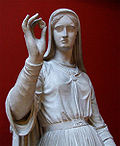 Ingeborg (1857) by H. W. Bissen


_by_H._W._Bissen_(angle).jpg)
