Parke-Davis: Difference between revisions
CSV import Tags: mobile edit mobile web edit |
CSV import |
||
| Line 24: | Line 24: | ||
[[Category:Companies established in 1866]] | [[Category:Companies established in 1866]] | ||
{{pharmaceutical-company-stub}} | {{pharmaceutical-company-stub}} | ||
<gallery> | |||
File:Parke_Davis.jpg|Parke-Davis | |||
File:Hervey_C_Parke_001.jpg|Hervey C. Parke | |||
File:Parke-Davis_Research_Laboratory_Detroit_MI.jpg|Parke-Davis Research Laboratory, Detroit, MI | |||
File:Parke-Davis_Plant-McDougal_Ave_Detroit_MI.jpg|Parke-Davis Plant, McDougal Ave, Detroit, MI | |||
</gallery> | |||
Latest revision as of 04:49, 18 February 2025
Parke-Davis is a subsidiary of the pharmaceutical company Pfizer. Founded in 1866 by Hervey C. Parke and George S. Davis in Detroit, Michigan, it was once the world's largest pharmaceutical company and is credited with developing several significant medical innovations, including the first bacterial vaccine and the first hormone therapy.
History[edit]
Parke-Davis was founded by Hervey C. Parke and George S. Davis in 1866. The company was incorporated in Michigan in 1871. Parke-Davis was the first company in the United States to produce standardized, purified pharmaceuticals on a large scale. The company's first product was an alcohol extract of cinchona bark, a treatment for malaria.
In 1891, Parke-Davis moved its manufacturing operations to a larger facility on Joseph Campau Avenue in Detroit. The company also established research laboratories and a botanical garden at this location. The laboratories were the first in the United States to be devoted exclusively to pharmaceutical research.
In 1970, Parke-Davis was acquired by Warner-Lambert, which in turn was acquired by Pfizer in 2000. Today, Parke-Davis operates as a subsidiary of Pfizer.
Innovations[edit]
Parke-Davis is credited with several significant medical innovations. In 1895, the company developed the first bacterial vaccine, a treatment for diphtheria. In 1921, Parke-Davis introduced the first hormone therapy, a treatment for diabetes that used insulin extracted from animal pancreases.
The company also developed several important drugs, including Dilantin (phenytoin) for epilepsy, Cogentin (benztropine) for Parkinson's disease, and Chloromycetin (chloramphenicol), the first broad-spectrum antibiotic.
Controversies[edit]
Parke-Davis has been involved in several controversies related to its business practices. In 2004, Pfizer pleaded guilty to criminal charges related to the promotion of Neurontin (gabapentin), a drug developed by Parke-Davis, for off-label uses. Pfizer agreed to pay $430 million in fines and penalties.
Legacy[edit]
Despite its controversies, Parke-Davis has left a significant legacy in the pharmaceutical industry. The company's commitment to research and development, its pioneering work in vaccine and hormone therapy, and its development of important drugs have all contributed to advances in medicine.
 | |
|---|---|
 |
 |
This article is a pharmaceutical-company stub. You can help WikiMD by expanding it!
-
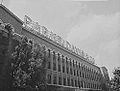 Parke-Davis
 -
 Hervey C. Parke
 -
Parke-Davis Research Laboratory, Detroit, MI
-
Parke-Davis Plant, McDougal Ave, Detroit, MI


