Dr. Morse's Indian Root Pills: Difference between revisions
CSV import |
CSV import |
||
| Line 20: | Line 20: | ||
{{pharma-stub}} | {{pharma-stub}} | ||
<gallery> | |||
File:Whcomstock.JPG|Dr. Morse's Indian Root Pills | |||
File:DrMorseIndianRootPills.JPG|Dr. Morse's Indian Root Pills | |||
File:Confederate20.jpg|Confederate $20 Note | |||
File:Confederatenotead.jpg|Advertisement for Confederate Note | |||
</gallery> | |||
Latest revision as of 04:46, 18 February 2025
Dr. Morse's Indian Root Pills were a popular patent medicine in the late 19th and early 20th centuries, marketed as a universal cure-all. The pills were one of many such products that capitalized on the public's trust in the healing power of natural remedies and the exotic appeal of indigenous formulations. Despite their widespread popularity, the efficacy and safety of Dr. Morse's Indian Root Pills, like many patent medicines of the era, were questionable.
History[edit]
The origin of Dr. Morse's Indian Root Pills is attributed to a formula developed by a Dr. Morse, although the details of his identity are murky. The rights to the formula were acquired by the Morse Brothers, who began manufacturing and selling the pills in the mid-1800s. The production was later taken over by the Comstock Patent Medicine Business, a prominent name in the patent medicine industry. The pills were manufactured in Morristown, New York, and sold across the United States, Canada, and other parts of the world.
Composition[edit]
The exact composition of Dr. Morse's Indian Root Pills was a closely guarded secret, as was common with patent medicines of the time. However, it is believed that the pills contained a mixture of herbs and roots with mild laxative properties. Ingredients purportedly included sarsaparilla, yellow dock, and mandrake root, among others. These ingredients were commonly used in traditional medicine for their supposed detoxifying and blood-purifying effects.
Marketing and Claims[edit]
The marketing of Dr. Morse's Indian Root Pills was aggressive and widespread, utilizing newspapers, almanacs, and testimonials to reach a broad audience. The pills were advertised as a remedy for a wide range of ailments, including liver and kidney diseases, constipation, headaches, and even malaria. The advertisements often featured testimonials from satisfied customers and endorsements from individuals claiming to be doctors or other health professionals.
Controversy and Decline[edit]
As with many patent medicines of the era, the claims made about Dr. Morse's Indian Root Pills came under scrutiny as the scientific understanding of medicine advanced. The Pure Food and Drug Act of 1906 and subsequent regulations imposed stricter controls on the marketing of medicinal products, requiring them to disclose their ingredients and prohibiting unsubstantiated health claims. These regulations, along with growing skepticism about the efficacy of patent medicines, led to a decline in the popularity of Dr. Morse's Indian Root Pills.
Legacy[edit]
Today, Dr. Morse's Indian Root Pills are remembered as an example of the patent medicine era, a time when unregulated remedies were widely sold with little concern for their effectiveness or safety. The story of these pills offers insight into the history of medicine and the evolution of regulatory practices designed to protect public health.

-
 Dr. Morse's Indian Root Pills
 -
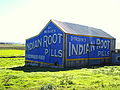 Dr. Morse's Indian Root Pills
 -
 Confederate $20 Note
 -
 Advertisement for Confederate Note


