Isolation (health care): Difference between revisions
CSV import Tags: mobile edit mobile web edit |
CSV import |
||
| Line 40: | Line 40: | ||
{{Medicine-stub}} | {{Medicine-stub}} | ||
<gallery> | |||
File:Tb_ward.jpg|Tuberculosis ward | |||
File:Aeromedical_Biological_Containment_System_(ABCS).jpg|Aeromedical Biological Containment System (ABCS) | |||
File:COVID-19_Warning_Mount_Pleasant_South_Carolina.jpg|COVID-19 Warning in Mount Pleasant, South Carolina | |||
File:WHO_in_PPE.jpg|WHO personnel in Personal Protective Equipment (PPE) | |||
File:New_isolation_ward.jpg|New isolation ward | |||
</gallery> | |||
Latest revision as of 04:45, 18 February 2025
Isolation in health care refers to various measures taken to prevent the spread of infectious diseases by separating individuals who are infected with communicable diseases from those who are healthy. Isolation helps to control the spread of infections, especially in hospitals, clinics, and other health care settings. This practice is crucial in managing outbreaks, pandemics, and endemic diseases.
Types of Isolation[edit]
There are several types of isolation in health care, each designed for specific pathogens and modes of transmission. These include:
- Contact Isolation: Used for infections, diseases, or germs that are spread by touching the patient or items in the patient's room. Examples include MRSA (Methicillin-resistant Staphylococcus aureus) and VRE (Vancomycin-resistant Enterococcus).
- Droplet Isolation: Applied when dealing with diseases or germs that are spread in tiny droplets caused by coughing and sneezing. Pertussis (Whooping cough) and influenza are examples of diseases requiring droplet isolation.
- Airborne Isolation: Necessary for diseases that are spread through the air on very small droplets or dust particles. Diseases like tuberculosis (Tuberculosis), measles (Measles), and varicella (Chickenpox) require airborne isolation.
- Protective Isolation: Also known as reverse isolation, this type is for patients with compromised immune systems, such as those undergoing chemotherapy, to protect them from infections from others.
Principles of Isolation[edit]
The principles of isolation in health care are based on understanding the modes of transmission of infectious agents and applying the appropriate barriers to interrupt this transmission. These principles include:
- Hand Hygiene: The most important and effective measure to prevent the spread of infections.
- Personal Protective Equipment (PPE): Utilizing gloves, gowns, masks, and eye protection to create barriers against infection.
- Patient Placement: Patients are placed in appropriate isolation rooms or areas depending on the type of isolation required.
- Environmental Controls: Regular cleaning and disinfection of surfaces and equipment in the patient's environment.
- Patient Transport: Minimizing the movement and transport of patients out of their room to essential purposes only and using appropriate precautions when transport is necessary.
Implementation in Health Care Settings[edit]
Implementing isolation practices requires careful planning and coordination within health care facilities. This includes:
- Education and Training: Health care workers must be educated and trained on the importance of isolation practices and the correct use of PPE.
- Isolation Facilities: Hospitals and clinics should have designated isolation rooms or areas equipped with necessary ventilation systems and facilities to support various types of isolation.
- Surveillance: Ongoing surveillance for infectious diseases is essential to identify outbreaks early and implement isolation measures promptly.
Challenges and Considerations[edit]
While isolation is a critical component of infection control, it also poses challenges, including:
- Psychological Impact: Isolation can be psychologically challenging for patients, leading to feelings of loneliness and depression.
- Resource Intensive: Isolation practices can be resource-intensive, requiring additional staff time, equipment, and facilities.
- Compliance: Ensuring compliance with isolation protocols among health care workers and visitors can be challenging.
Conclusion[edit]
Isolation is a fundamental practice in health care for the prevention and control of infectious diseases. By understanding and applying the principles of isolation, health care facilities can protect patients, health care workers, and the community from the spread of infections.

-
 Tuberculosis ward
 -
 Aeromedical Biological Containment System (ABCS)
 -
 COVID-19 Warning in Mount Pleasant, South Carolina
 -
 WHO personnel in Personal Protective Equipment (PPE)
 -
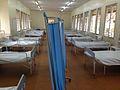 New isolation ward

.jpg)


