Perennial: Difference between revisions
CSV import |
CSV import Tags: mobile edit mobile web edit |
||
| Line 30: | Line 30: | ||
{{stub}} | {{stub}} | ||
<gallery> | |||
File:Cykoria_podroznik_pokroj.jpg|Cichorium intybus plant | |||
File:Jupiter_symbol.svg|Symbol of Jupiter | |||
File:RIMG0163uf.JPG|Perennial | |||
File:Switchgrass_roots.jpg|Switchgrass roots | |||
</gallery> | |||
Latest revision as of 04:39, 18 February 2025
Perennial plants are plants that live for more than two years. They include a wide variety of plants, from grasses to trees. The term is often used to differentiate a plant from shorter-lived annuals and biennials. The term is also widely used to distinguish plants with little or no woody growth from trees and shrubs, which are also technically perennials.
Characteristics[edit]
Perennials, especially small flowering plants, grow and bloom over the spring and summer, die back every autumn and winter, and then return in the spring from their rootstock, rather than seeding themselves as an annual plant does. These are known as herbaceous perennials. However, depending on the rigors of local climate, a plant that is a perennial in its native habitat, or in a milder garden, may be treated by a gardener as an annual and planted out every year, from seed, from cuttings or from divisions.
Types of Perennials[edit]
There are many types of perennials, from flowering plants like roses and tulips, to grasses, ferns, and trees. Some perennials, like roses and peonies, are known for their flowers, while others, like ferns and grasses, are valued for their foliage.
Cultivation[edit]
Perennials are typically grown for their attractive flowers or foliage. They are often used in landscaping and can be found in gardens, parks, and other public spaces. Some perennials, like lavender and rosemary, are also grown for their scent and culinary uses.
See Also[edit]
References[edit]
<references />
 |
 |
-
 Cichorium intybus plant
 -
 Symbol of Jupiter
 -
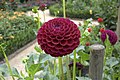 Perennial
 -
 Switchgrass roots


