Innate immune system: Difference between revisions
CSV import |
CSV import |
||
| Line 32: | Line 32: | ||
[[Category:Human physiology]] | [[Category:Human physiology]] | ||
{{Immunology-stub}} | {{Immunology-stub}} | ||
<gallery> | |||
File:Innate_immune_system.png|Innate immune system | |||
File:SEM_blood_cells.jpg|Scanning electron micrograph of blood cells | |||
File:Macrophage.jpg|Macrophage engulfing bacteria | |||
File:PBNeutrophil.jpg|Peripheral blood neutrophil | |||
File:PBEosinophil.jpg|Peripheral blood eosinophil | |||
</gallery> | |||
Latest revision as of 04:39, 18 February 2025
Innate immune system is a part of the overall immune system that comprises the cells and mechanisms that defend the host from infection by other organisms in a non-specific manner. This means that the cells of the innate system recognize and respond to pathogens in a generic way, but unlike the adaptive immune system, it does not confer long-lasting or protective immunity to the host.
Components of the Innate Immune System[edit]
The innate immune system is composed of physical and chemical barriers, phagocytic leukocytes, dendritic cells, natural killer cells, and circulating plasma proteins.
Physical and Chemical Barriers[edit]
The physical barriers of the innate immune system include the skin and mucous membranes. These barriers are very effective in blocking most pathogens from entering the body. The chemical barriers include the acidic environment of the stomach and antimicrobial substances like lysozyme in tears and saliva.
Phagocytic Leukocytes[edit]
Phagocytic leukocytes, which include neutrophils and macrophages, are able to ingest and destroy pathogens. They are attracted to the site of infection by chemical signals, in a process known as chemotaxis.
Dendritic Cells[edit]
Dendritic cells are antigen-presenting cells that process antigen material and present it on the cell surface to the T cells of the immune system. They act as messengers between the innate and the adaptive immune systems.
Natural Killer Cells[edit]
Natural killer cells (NK cells) are a type of cytotoxic lymphocyte that is capable of killing infected cells and tumor cells. They are part of the innate immune system due to their ability to recognize stressed cells in the absence of antibodies and MHC, allowing for a much faster immune reaction.
Circulating Plasma Proteins[edit]
The circulating plasma proteins, also known as the complement system, enhance the ability of antibodies and phagocytic cells to clear microbes and damaged cells from an organism, promote inflammation, and attack the pathogen's cell membrane.
Function of the Innate Immune System[edit]
The innate immune system provides an immediate but non-specific response to pathogens. It also plays a crucial role in the activation of the adaptive immune system. The innate immune response is activated by chemical properties of the antigen.
See Also[edit]

This article is a immunology stub. You can help WikiMD by expanding it!
-
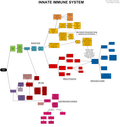 Innate immune system
 -
 Scanning electron micrograph of blood cells
 -
 Macrophage engulfing bacteria
 -
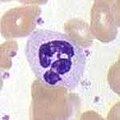 Peripheral blood neutrophil
 -
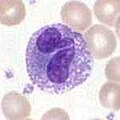 Peripheral blood eosinophil


