Drifter (fishing boat): Difference between revisions
CSV import |
CSV import |
||
| Line 25: | Line 25: | ||
{{fishing-stub}} | {{fishing-stub}} | ||
{{food-stub}} | {{food-stub}} | ||
<gallery> | |||
File:Steam_Drifter_Lydia_Eva.jpg|Steam Drifter Lydia Eva | |||
File:Rigging2.png|Rigging of a Drifter | |||
File:Groenewegen.D3.Buis.jpg|Groenewegen D3 Buis | |||
File:Reaper_in_sail.jpg|Reaper in Sail | |||
File:Leaving_Port_Seton_-_geograph.org.uk_-_830836.jpg|Leaving Port Seton | |||
</gallery> | |||
Latest revision as of 04:37, 18 February 2025
Drifter (fishing boat)
A Drifter is a type of fishing boat that is used primarily for commercial fishing. The name "drifter" comes from the boat's method of operation, drifting with the current or wind.
History[edit]
The use of drifters as a method of catching fish dates back to the 19th century. These boats were originally designed to catch herring in the North Sea, and were primarily used in Scotland. The design of the drifter was optimized for the conditions of the North Sea, and it quickly became a popular choice for fishermen in the area.
Design[edit]
Drifters are typically large, sturdy boats that are capable of withstanding the rough conditions of the open sea. They are equipped with a large net, known as a drift net, which is used to catch fish. The net is set out in a long line, and the boat drifts along with the current, allowing the net to catch fish as it moves.
Modern Usage[edit]
While the use of drifters has declined in recent years due to changes in fishing regulations and the advent of more modern fishing techniques, they are still used in some parts of the world. In particular, drifters are still commonly used in the North Atlantic and the Bering Sea.
See Also[edit]
 | This fishing-related article is a stub. You can help Wikipedia by adding missing information. |

-
 Steam Drifter Lydia Eva
 -
 Rigging of a Drifter
 -
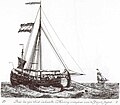 Groenewegen D3 Buis
 -
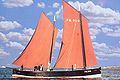 Reaper in Sail
 -
 Leaving Port Seton


