1858 Bradford sweets poisoning: Difference between revisions
CSV import |
CSV import |
||
| Line 42: | Line 42: | ||
[[Category:Health disasters in the United Kingdom]] | [[Category:Health disasters in the United Kingdom]] | ||
[[Category:Arsenic poisoning]] | [[Category:Arsenic poisoning]] | ||
<gallery> | |||
File:The_Great_Lozenge-Maker_A_Hint_to_Paterfamilias.jpg|"The Great Lozenge-Maker: A Hint to Paterfamilias" | |||
File:Arsenic_trioxide.jpg|Arsenic trioxide | |||
File:Bradford,1863.png|Bradford, 1863 | |||
File:John_Henry_Bell_(1832-1906).jpeg|John Henry Bell (1832-1906) | |||
</gallery> | |||
Latest revision as of 04:36, 18 February 2025
1858 Bradford sweets poisoning[edit]

The 1858 Bradford sweets poisoning was a public health disaster in Bradford, West Yorkshire, England, where 21 people died and over 200 became ill after consuming lozenges that had been accidentally contaminated with arsenic trioxide.
Background[edit]
In the mid-19th century, the production of sweets was a burgeoning industry in England. However, the lack of regulation and oversight in the manufacturing process often led to dangerous practices. In 1858, a series of events in Bradford highlighted the potential hazards of this unregulated industry.
The Incident[edit]

The incident occurred when a local confectioner, William Hardaker, known as "Humbug Billy," sold peppermint lozenges that had been adulterated with arsenic trioxide. The lozenges were manufactured by Joseph Neal, who mistakenly used arsenic trioxide instead of the intended ingredient, daff, a type of gypsum used as a filler.
The mistake happened because the arsenic trioxide was stored in a similar container to the daff and was supplied by a local pharmacist, Charles Hodgson, who had inadvertently delivered the wrong substance.
Consequences[edit]
The consumption of the poisoned lozenges led to severe symptoms of arsenic poisoning, including vomiting, abdominal pain, and diarrhea. Within days, 21 people had died, and over 200 others were affected.
The incident prompted a public outcry and led to significant changes in food safety regulations in the United Kingdom. It highlighted the need for stricter controls over the sale and distribution of poisons and the ingredients used in food production.
Investigation and Legal Outcome[edit]
.jpeg)
The investigation into the poisoning was led by John Henry Bell, a local doctor who identified arsenic as the cause of the symptoms. His findings were crucial in understanding the scale and nature of the disaster.
Despite the severity of the incident, no one was held legally accountable due to the lack of laws governing food safety at the time. However, the public pressure resulting from the incident led to the passage of the Adulteration of Food and Drink Act 1860 and later the Sale of Food and Drugs Act 1875.
Legacy[edit]
The Bradford sweets poisoning remains a significant event in the history of public health and food safety. It serves as a reminder of the importance of regulatory oversight in the production and sale of consumable goods.
Related pages[edit]
Gallery[edit]
-
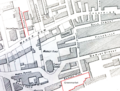 Map of Bradford in 1863

-
 "The Great Lozenge-Maker: A Hint to Paterfamilias"
 -
 Arsenic trioxide
 -
Bradford, 1863
-
 John Henry Bell (1832-1906)
