Enediyne: Difference between revisions
CSV import Tags: mobile edit mobile web edit |
CSV import |
||
| Line 24: | Line 24: | ||
{{Chemistry-stub}} | {{Chemistry-stub}} | ||
{{Medicine-stub}} | {{Medicine-stub}} | ||
== Enediyne == | |||
<gallery> | |||
File:Endiine_cis.svg|Enediyne | |||
File:Calicheamicin.png|Calicheamicin | |||
File:Generic_Bergman_Cyclization_Electron_Movement.png|Bergman Cyclization Electron Movement | |||
File:Generic_Myers-Saito_Cyclization_Movement.png|Myers-Saito Cyclization Movement | |||
File:Enediyne_DNA_damage.png|Enediyne DNA Damage | |||
</gallery> | |||
Latest revision as of 04:34, 18 February 2025
Enediyne is a class of highly potent antibiotics and antineoplastic agents characterized by their unique enediyne core structure, which is composed of a double bond (ene) flanked by two triple bonds (diyne). This structural motif is responsible for the compounds' potent DNA-damaging activity, making them of significant interest in the development of chemotherapy agents for cancer treatment. Enediynes are produced naturally by various microorganisms, including bacteria of the genera Micromonospora and Streptomyces.
Mechanism of Action[edit]
The cytotoxic activity of enediynes is primarily attributed to their ability to undergo a Bergman cyclization, a chemical reaction that generates a highly reactive diradical species. This diradical can abstract hydrogen atoms from the DNA backbone, leading to DNA strand breaks and subsequent cell death. The unique mechanism of action of enediynes allows them to target rapidly dividing cancer cells with high specificity, although their potency also poses a risk of toxicity to normal cells.
Clinical Applications[edit]
Several enediyne-based drugs have been developed and approved for clinical use. Among them, Calicheamicin and Espiramicin are notable examples. Calicheamicin, for instance, is used in the targeted therapy drug Mylotarg (gemtuzumab ozogamicin) for the treatment of acute myeloid leukemia (AML). These drugs are typically conjugated to antibodies that specifically target cancer cells, thereby minimizing the exposure of normal cells to the toxic effects of the enediyne.
Research and Development[edit]
The potent activity of enediynes has spurred extensive research into their mechanism of action, natural synthesis, and potential applications in cancer therapy. Efforts are also being made to engineer less toxic and more selective derivatives, as well as to explore their use in combination therapies to enhance their efficacy and reduce side effects. The development of synthetic analogs and the discovery of new natural enediynes continue to be active areas of research.
Safety and Toxicity[edit]
Given their potent DNA-damaging activity, the safety and toxicity of enediyne-based therapies are of paramount concern. The therapeutic window (the range of doses at which a drug is effective without being excessively toxic) is narrow for these compounds, necessitating careful dose management and monitoring during treatment. Research into targeted delivery systems and the development of enediyne derivatives with improved selectivity for cancer cells are ongoing strategies to mitigate these risks.
See Also[edit]


Enediyne[edit]
-
 Enediyne
 -
 Calicheamicin
 -
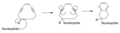 Bergman Cyclization Electron Movement
 -
 Myers-Saito Cyclization Movement
 -
 Enediyne DNA Damage


