Mammary tumor: Difference between revisions
CSV import Tags: mobile edit mobile web edit |
CSV import |
||
| Line 27: | Line 27: | ||
{{Medicine-stub}} | {{Medicine-stub}} | ||
==Mammary_tumor== | |||
<gallery> | |||
File:Mammary_tumor.JPG|Mammary tumor | |||
File:Lexhe_magnant_må_tetes_lon.jpg|Lexhe magnant må tetes lon | |||
File:Lexhe_magnant_må_tetes_près.jpg|Lexhe magnant må tetes près | |||
File:Metastasized_canine_mammary_carcinoma_legended.svg|Metastasized canine mammary carcinoma | |||
File:Rat_Mammary_Cyst.JPG|Rat mammary cyst | |||
</gallery> | |||
Latest revision as of 04:28, 18 February 2025
Mammary tumor refers to a neoplastic growth located in the mammary gland. It is a condition that can affect both humans and other animals, with varying implications for health and treatment outcomes. In humans, mammary tumors are most commonly associated with breast cancer, a significant health concern worldwide. In animals, such as dogs and cats, mammary tumors can also present serious health issues, with the approach to treatment and prognosis varying by species.
Etiology[edit]
The development of mammary tumors is influenced by a complex interplay of genetic, hormonal, and environmental factors. In humans, risk factors include age, family history of breast cancer, genetic mutations (such as BRCA1 and BRCA2), early menarche, late menopause, use of hormone replacement therapy, and lifestyle factors such as alcohol consumption and obesity. In animals, breed, age, and reproductive history (such as whether the animal has been spayed or neutered) can influence the risk of developing mammary tumors.
Pathophysiology[edit]
Mammary tumors can be benign (non-cancerous) or malignant (cancerous), with the latter having the potential to invade surrounding tissues and metastasize to distant organs. The pathophysiology of mammary tumors involves the uncontrolled growth of cells within the mammary gland. This can disrupt normal glandular structure and function, leading to the formation of a palpable mass. Malignant tumors can further invade the lymphatic and vascular systems, spreading cancer cells beyond the original site.
Clinical Presentation[edit]
The most common presentation of a mammary tumor is a lump or mass within the breast tissue. Other symptoms may include changes in the skin over the breast, nipple discharge, and changes in the shape or size of the breast. In animals, mammary tumors may also present as a solitary lump or multiple masses within the mammary glands, and may or may not be accompanied by systemic signs of illness.
Diagnosis[edit]
Diagnosis of mammary tumors typically involves a combination of clinical examination, imaging studies (such as mammography or ultrasound), and biopsy. Histopathological examination of biopsy samples is essential for determining the nature of the tumor (benign vs. malignant) and guiding treatment decisions.
Treatment[edit]
Treatment options for mammary tumors vary depending on the type and stage of the tumor, as well as the overall health of the patient. In humans, treatment may include surgery (such as lumpectomy or mastectomy), radiation therapy, chemotherapy, hormone therapy, and targeted therapy. In animals, treatment often involves surgical removal of the tumor, with the option of adjunctive chemotherapy or radiation therapy in certain cases.
Prognosis[edit]
The prognosis for individuals with mammary tumors depends on various factors, including the type and stage of the tumor, the presence of metastasis, and the response to treatment. Early detection and treatment are critical for improving outcomes.
Prevention[edit]
Preventive measures for mammary tumors include lifestyle modifications, such as maintaining a healthy weight and limiting alcohol consumption, as well as medical interventions like genetic counseling and testing for individuals at high risk. In animals, spaying before the first heat cycle has been shown to significantly reduce the risk of developing mammary tumors.

Mammary_tumor[edit]
-
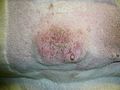 Mammary tumor
 -
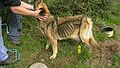 Lexhe magnant må tetes lon
 -
 Lexhe magnant må tetes près
 -
 Metastasized canine mammary carcinoma
 -
 Rat mammary cyst


