Agarwood: Difference between revisions
CSV import |
CSV import |
||
| Line 34: | Line 34: | ||
[[Category:Incense material]] | [[Category:Incense material]] | ||
[[Category:Perfume ingredients]] | [[Category:Perfume ingredients]] | ||
== Agarwood == | |||
<gallery> | |||
File:Agarwood.JPG|Agarwood | |||
File:Agarwood.jpg|Agarwood | |||
File:Qing-Agarwood-Rosary.jpg|Qing Dynasty Agarwood Rosary | |||
File:Aquilaria_crassna.jpg|Aquilaria crassna | |||
File:condensers.jpg|Agarwood | |||
</gallery> | |||
Latest revision as of 04:22, 18 February 2025
Agarwood


Agarwood, also known as oud, aloeswood, or gaharu, is a fragrant dark resinous wood used in incense, perfume, and small carvings. It is formed in the heartwood of Aquilaria trees when they become infected with a type of mold. Prior to infection, the heartwood is odorless, relatively light, and pale colored; however, as the infection progresses, the tree produces a dark aromatic resin, called aloes, in response to the attack, which results in a very dense, dark, resin-embedded heartwood.
Formation[edit]
Agarwood is formed in the heartwood of Aquilaria trees, which are native to Southeast Asia. The formation of agarwood occurs when the tree is infected by a specific type of mold, Phialophora parasitica. The tree responds to the infection by producing a dark aromatic resin, which saturates the heartwood. This process can take several years, and the quality of the agarwood depends on the duration and intensity of the infection.
Uses[edit]
Agarwood is highly valued for its distinctive fragrance and is used in the production of high-quality incense, perfume, and traditional medicine. It is also used in the creation of small carvings and religious artifacts. The oil extracted from agarwood, known as oud oil, is one of the most expensive natural raw materials in the world.
Cultural Significance[edit]
Agarwood has been used for centuries in various cultures for its aromatic properties. In Buddhism, Hinduism, and Islam, agarwood is used in religious ceremonies and rituals. It is also mentioned in ancient texts such as the Sanskrit Vedas and the Quran.
Conservation[edit]
Due to its high value and overharvesting, many species of Aquilaria are now considered threatened. Efforts are being made to cultivate agarwood sustainably through plantation and inoculation techniques, which involve artificially inducing the formation of agarwood in young trees.
Gallery[edit]
-
 Agarwood rosary beads
 -
 Aquilaria crassna tree
 -
 Distillation equipment for extracting oud oil


Related pages[edit]
Agarwood[edit]
-
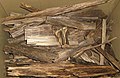 Agarwood
 -
 Agarwood
 -
Qing Dynasty Agarwood Rosary
-
Aquilaria crassna
-
Agarwood
