Whole-body counting: Difference between revisions
CSV import Tags: mobile edit mobile web edit |
CSV import |
||
| Line 32: | Line 32: | ||
{{medicine-stub}} | {{medicine-stub}} | ||
<gallery> | |||
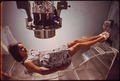
File:WHOLE_BODY_COUNTER_IS_USED_TO_MEASURE_NATURAL_LEVELS_OF_RADIATION_-_NARA_-_547319.tif|Whole-body counting | |||
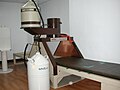
File:Scanning_Bed_WBC.JPG|Whole-body counting | |||
File:Stand-up_WBC.JPG|Whole-body counting | |||
</gallery> | |||
Latest revision as of 04:12, 18 February 2025
Whole-body counting is a method used in the field of nuclear medicine to measure the quantity of radioactive substances present in the body. This technique is primarily used to monitor individuals who may have been exposed to radiation, either through their work environment or due to a nuclear accident.
Overview[edit]
Whole-body counting involves the use of a scintillation detector or a gamma camera to detect and measure the radiation emitted by radioactive substances within the body. The individual is placed inside a shielded room, and the detector is used to scan the body for radiation. The data collected is then analyzed to determine the type and quantity of radioactive substances present.
Procedure[edit]
The procedure for whole-body counting typically involves the individual lying down on a bed inside a shielded room. The detector is then positioned above the individual and moved slowly from head to toe, scanning the body for radiation. The procedure is painless and non-invasive, and can take anywhere from 15 minutes to an hour to complete, depending on the type of detector used and the level of detail required.
Applications[edit]
Whole-body counting is used in a variety of applications, including:
- Monitoring workers in the nuclear industry who may be exposed to radiation as part of their job.
- Assessing individuals who may have been exposed to radiation due to a nuclear accident or incident.
- Research studies investigating the effects of radiation on the human body.
Limitations[edit]
While whole-body counting is a valuable tool in the field of nuclear medicine, it does have some limitations. For example, it can only detect radioactive substances that emit gamma radiation, and it may not be able to detect very low levels of radiation. Additionally, the procedure can be time-consuming and requires specialized equipment and trained personnel.
See also[edit]

-
 Whole-body counting
 -
 Whole-body counting
 -
 Whole-body counting


