Vertebral compression fracture: Difference between revisions
CSV import |
CSV import |
||
| Line 37: | Line 37: | ||
[[Category:Bone fractures]] | [[Category:Bone fractures]] | ||
[[Category:Spinal disorders]] | [[Category:Spinal disorders]] | ||
== Vertebral_compression_fracture == | |||
<gallery> | |||
File:Blausen_0250_CompressionFracture_Vertebrae.png|Compression fracture of vertebrae illustration | |||
File:T12compressionfracMark.png|Marked T12 compression fracture | |||
File:Intravertebral_vacuum_cleft_sign.jpg|Intravertebral vacuum cleft sign | |||
</gallery> | |||
Revision as of 04:09, 18 February 2025


A vertebral compression fracture (VCF) is a type of fracture that occurs in the vertebrae of the spine. These fractures are most commonly caused by osteoporosis, a condition that weakens bones, making them more susceptible to fractures. Other causes include trauma and metastatic cancer.
Signs and symptoms
Patients with vertebral compression fractures often experience sudden onset of back pain. The pain is typically localized to the area of the fracture and may be exacerbated by movement. In some cases, the fracture may lead to a loss of height and a stooped posture, known as kyphosis.
Causes
The primary cause of vertebral compression fractures is osteoporosis, which leads to decreased bone density and increased fragility. Other causes include trauma from falls or accidents, and pathological fractures due to metastatic cancer, where cancer cells spread to the bone and weaken it.
Diagnosis
Diagnosis of a vertebral compression fracture is typically made through a combination of patient history, physical examination, and imaging studies. X-rays are commonly used to identify fractures, while MRI or CT scans may be employed to assess the extent of the fracture and any associated soft tissue damage.
Treatment
Treatment for vertebral compression fractures depends on the severity of the fracture and the underlying cause. Conservative treatment options include pain management with medications, physical therapy, and bracing to support the spine. In cases where conservative treatment is insufficient, surgical options such as vertebroplasty or kyphoplasty may be considered to stabilize the fracture and relieve pain.
Prognosis
The prognosis for individuals with vertebral compression fractures varies depending on the cause and severity of the fracture. Many patients experience significant pain relief with appropriate treatment, although some may continue to have chronic pain or disability. Preventive measures, such as treating osteoporosis and avoiding falls, are important to reduce the risk of future fractures.
Prevention
Preventive strategies for vertebral compression fractures focus on maintaining bone health and preventing falls. This includes adequate intake of calcium and vitamin D, regular weight-bearing exercise, and medications to treat osteoporosis. Fall prevention strategies, such as home safety modifications and balance training, are also important.
Related pages
References
Vertebral_compression_fracture
-
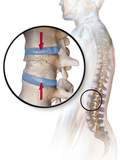 Compression fracture of vertebrae illustration
 -
 Marked T12 compression fracture
 -
 Intravertebral vacuum cleft sign
