Premature heart beat: Difference between revisions
CSV import |
CSV import |
||
| Line 43: | Line 43: | ||
{{Cardiology-stub}} | {{Cardiology-stub}} | ||
{{medicine-stub}} | {{medicine-stub}} | ||
<gallery> | |||
File:PVC10.JPG|Premature heart beat | |||
File:Premature_heart_beat_revealed_by_laser_Doppler_holography_of_the_eye_fundus.gif|Premature heart beat revealed by laser Doppler holography of the eye fundus | |||
File:ExtraSystole.jpg|Premature heart beat | |||
</gallery> | |||
Revision as of 04:07, 18 February 2025
Premature Heartbeat is a common cardiac arrhythmia characterized by an early heartbeat initiated by the heart's upper or lower chambers, disrupting the normal heart rhythm. This condition is also known as premature atrial contractions (PACs) when it originates in the atria, or premature ventricular contractions (PVCs) when it originates in the ventricles. Premature heartbeats are often benign and can occur in healthy individuals without causing significant health issues. However, frequent premature heartbeats may sometimes indicate underlying heart conditions or increase the risk of more serious arrhythmias.
Causes
The exact cause of premature heartbeats is not always clear, but several factors may increase the risk of developing this condition. These include:
- Stress and anxiety
- High caffeine intake
- Alcohol consumption
- Nicotine use
- Certain medications, including decongestants and antihistamines
- Electrolyte imbalances
- Underlying heart disease, such as cardiomyopathy or coronary artery disease
Symptoms
Many individuals with premature heartbeats do not experience any symptoms and are unaware of their condition until it is detected during a routine examination. When symptoms do occur, they may include:
- A feeling of a skipped heartbeat or palpitations
- Fluttering in the chest
- Increased awareness of the heartbeat
- Brief pauses between heartbeats
Diagnosis
Diagnosis of premature heartbeats typically involves a review of the patient's medical history, a physical examination, and one or more of the following tests:
- Electrocardiogram (ECG or EKG) - to detect and record the heart's electrical activity
- Holter monitor - a portable ECG device worn for 24 to 48 hours to record heart activity during normal daily activities
- Event monitor - similar to a Holter monitor, but used for longer periods to capture arrhythmias that occur less frequently
Treatment
Treatment for premature heartbeats may not be necessary if the condition is benign and the patient is asymptomatic. When treatment is required, it may include:
- Lifestyle changes, such as reducing caffeine and alcohol intake, quitting smoking, and managing stress
- Medications to control heart rate and rhythm, such as beta-blockers or calcium channel blockers
- In rare cases, medical procedures like catheter ablation may be recommended to treat frequent, symptomatic premature heartbeats that do not respond to other treatments.
Prognosis
The prognosis for individuals with premature heartbeats is generally good, especially in the absence of underlying heart disease. Most people do not experience significant health problems related to this condition. However, monitoring and managing any potential underlying causes is important to prevent complications.
See Also

This article is a cardiovascular system stub. You can help WikiMD by expanding it!

-
 Premature heart beat
 -
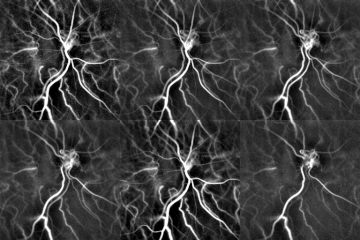 Premature heart beat revealed by laser Doppler holography of the eye fundus
 -
 Premature heart beat


