Gaseous signaling molecules: Difference between revisions
CSV import Tags: mobile edit mobile web edit |
CSV import |
||
| Line 24: | Line 24: | ||
{{Biochemistry-stub}} | {{Biochemistry-stub}} | ||
<gallery> | |||
File:Carbon_suboxide_macrocyclic_polymers.gif|Gaseous_signaling_molecules | |||
File:Ethylene_Signal_Transduction.svg|Ethylene Signal Transduction | |||
File:Yang-cycle.svg|Yang Cycle | |||
</gallery> | |||
Latest revision as of 03:54, 18 February 2025
Gaseous signaling molecules are small, gaseous substances that play crucial roles in various biological processes, including vasodilation, neurotransmission, and immune response. These molecules are unique in their action, as they can diffuse freely across cell membranes, enabling rapid signaling across cells and tissues. The most well-known gaseous signaling molecules include nitric oxide (NO), carbon monoxide (CO), and hydrogen sulfide (H2S).
Nitric Oxide (NO)[edit]
Nitric oxide is a critical signaling molecule involved in numerous physiological and pathological processes. It is synthesized from L-arginine by the enzyme nitric oxide synthase (NOS). NO plays a pivotal role in vascular regulation by inducing vasodilation, which improves blood flow and reduces blood pressure. Additionally, NO is involved in the immune system, where it acts as a defense mechanism against pathogens. It also functions as a neurotransmitter in the nervous system, contributing to the regulation of neural activity.
Carbon Monoxide (CO)[edit]
Carbon monoxide, traditionally viewed as a toxic gas, has been recognized as an important endogenous gaseous signaling molecule. It is produced in the body by the breakdown of heme by the enzyme heme oxygenase. CO has similar functions to NO, including vasodilation and anti-inflammatory effects. It plays a significant role in modulating vascular tone and protecting tissues from oxidative stress and apoptosis.
Hydrogen Sulfide (H2S)[edit]
Hydrogen sulfide is another endogenous gasotransmitter that has gained attention for its signaling capabilities. It is produced from cysteine by the action of enzymes such as cystathionine β-synthase (CBS) and cystathionine γ-lyase (CSE). H2S has been implicated in various physiological processes, including modulation of inflammation, regulation of blood pressure, and protection of the cardiovascular system. Like NO and CO, H2S exerts vasodilatory effects and has been shown to have cytoprotective properties.
Mechanisms of Action[edit]
The mechanisms by which gaseous signaling molecules exert their effects are diverse and complex. They can activate soluble guanylate cyclase (sGC) to produce cyclic guanosine monophosphate (cGMP), which then acts as a second messenger to elicit various cellular responses. Additionally, these molecules can modulate the activity of ion channels, protein kinases, and transcription factors, further influencing cellular function and signaling pathways.
Therapeutic Potential[edit]
Given their wide range of biological functions, gaseous signaling molecules have significant therapeutic potential. Pharmacological agents that release NO, CO, or H2S, as well as inhibitors of their synthesizing enzymes, are being explored for the treatment of cardiovascular diseases, inflammatory conditions, and neurodegenerative disorders. The development of drugs that can modulate the levels and activities of these gases offers promising avenues for novel therapies.
Conclusion[edit]
Gaseous signaling molecules represent a unique class of biological mediators that play essential roles in maintaining homeostasis and responding to physiological and pathological stimuli. Understanding the complex mechanisms of action and the therapeutic potential of NO, CO, and H2S continues to be a dynamic and expanding field of research, with implications for the treatment of a wide range of diseases.
.svg)
This article is a biochemistry stub. You can help WikiMD by expanding it!
-
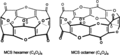 Gaseous_signaling_molecules
 -
 Ethylene Signal Transduction
 -
 Yang Cycle


