Tasmannia lanceolata: Difference between revisions
CSV import Tags: mobile edit mobile web edit |
CSV import |
||
| Line 22: | Line 22: | ||
{{medicinal-herbs-stub}} | {{medicinal-herbs-stub}} | ||
{{food-stub}} | {{food-stub}} | ||
<gallery> | |||
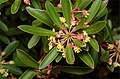
File:Tasmannia_lanceolata_female.jpg|Tasmannia lanceolata female | |||
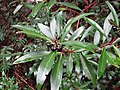
File:Tasmannia_lanceolata.jpg|Tasmannia lanceolata | |||
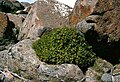
File:Tasmannia_lanceolata_habit.jpg|Tasmannia lanceolata habit | |||
</gallery> | |||
Latest revision as of 03:53, 18 February 2025
Tasmannia lanceolata, also known as the Mountain Pepper, is a shrub native to woodlands and cool temperate rainforest of south-eastern Australia. The plant is named after the botanist Gustav Tasman, who first classified the species.
Description[edit]
Tasmannia lanceolata is a dioecious shrub, which means it has separate male and female plants. It can grow up to 10 meters tall, but is often smaller. The leaves are lanceolate (lance-shaped) and dark green, while the flowers are small and white. The plant produces small, black, spherical fruits that are used as a pepper substitute.
Distribution and habitat[edit]
Tasmannia lanceolata is found in Tasmania, Victoria, and New South Wales in Australia. It grows in cool, moist, shady locations in the understorey of woodlands and rainforests.
Uses[edit]
The berries and leaves of Tasmannia lanceolata have been used by indigenous Australians for culinary and medicinal purposes. Today, the plant is commercially cultivated for its berries, which are used as a pepper substitute in cooking. The leaves are also used in herbal medicine for their antimicrobial properties.
Cultivation[edit]
Tasmannia lanceolata is a hardy plant that can tolerate a range of soil types, but prefers well-drained, acidic soil. It can be propagated from seed or cuttings, and requires a cool, shady location to thrive.
Conservation status[edit]
While Tasmannia lanceolata is not currently listed as threatened, its habitat is under pressure from deforestation and climate change. Conservation efforts are focused on protecting its habitat and promoting sustainable harvesting practices.


This article is a Medicinal herbs stub. You can help WikiMD by expanding it!

-
 Tasmannia lanceolata female
 -
 Tasmannia lanceolata
 -
 Tasmannia lanceolata habit


