Hydroxycorticosteroids: Difference between revisions
CSV import Tags: mobile edit mobile web edit |
CSV import Tags: mobile edit mobile web edit |
||
| Line 30: | Line 30: | ||
{{medicine-stub}} | {{medicine-stub}} | ||
<gallery> | |||
File:Trimethyl_steroid-nomenclature.png|Hydroxycorticosteroids | |||
File:Corticosterone-2D-skeletal.svg|Corticosterone structure | |||
File:Cortison.svg|Cortison structure | |||
</gallery> | |||
Latest revision as of 02:11, 18 February 2025
Hydroxycorticosteroids are a type of steroid that are produced in the adrenal gland. They are a class of corticosteroids that have a hydroxyl group at the 11-position. Hydroxycorticosteroids play a crucial role in the body's response to stress and regulate a wide range of physiological processes, including immune response, metabolism, and blood pressure regulation.
Production[edit]
Hydroxycorticosteroids are synthesized in the adrenal cortex, the outer layer of the adrenal gland. The process begins with the conversion of cholesterol into pregnenolone by the enzyme cholesterol desmolase. Pregnenolone is then converted into progesterone, which is further converted into 11-deoxycorticosterone by a series of enzymatic reactions. Finally, 11-deoxycorticosterone is hydroxylated at the 11-position to form hydroxycorticosteroids.
Function[edit]
Hydroxycorticosteroids are involved in a wide range of physiological processes. They help regulate the body's metabolic rate, influence the immune system, and help maintain blood pressure and cardiovascular function. They also play a role in the body's response to stress, helping to mobilize energy resources and prepare the body for action.
Clinical significance[edit]
Abnormal levels of hydroxycorticosteroids can lead to a variety of health problems. High levels can cause Cushing's syndrome, a condition characterized by weight gain, high blood pressure, and diabetes. Low levels can lead to Addison's disease, a condition characterized by weight loss, low blood pressure, and fatigue.
See also[edit]
References[edit]
<references />

-
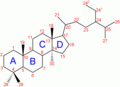 Hydroxycorticosteroids
 -
 Corticosterone structure
 -
 Cortison structure


