High-grade prostatic intraepithelial neoplasia: Difference between revisions
CSV import Tags: mobile edit mobile web edit |
CSV import |
||
| Line 24: | Line 24: | ||
{{Medicine-stub}} | {{Medicine-stub}} | ||
<gallery> | |||
File:Histopathology_of_high-grade_prostatic_intraepithelial_neoplasia_(HGPIN),_annotated.jpg|Histopathology of high-grade prostatic intraepithelial neoplasia (HGPIN), annotated | |||
File:High-grade_prostatic_intraepithelial_neoplasia_low_mag.jpg|High-grade prostatic intraepithelial neoplasia low magnification | |||
</gallery> | |||
Revision as of 02:03, 18 February 2025
High-grade prostatic intraepithelial neoplasia (HGPIN) is a pre-malignant lesion of the prostate gland. It is considered one of the most likely precursors to prostate cancer, which is one of the leading causes of cancer deaths among men. HGPIN is characterized by abnormal cells in the lining of the prostate gland ducts or acini, but these cells do not invade surrounding tissues or spread to other parts of the body.
Etiology and Pathogenesis
The exact cause of HGPIN is not fully understood, but it is believed to involve a combination of genetic, hormonal, and environmental factors. Changes in the DNA of prostate cells may lead to abnormal cell growth and differentiation. Hormones, particularly testosterone and other androgens, may also play a role in the development of HGPIN.
Clinical Significance
HGPIN is often discovered incidentally during a biopsy for prostate cancer screening or investigation of prostate-related symptoms. The presence of HGPIN in biopsy samples is associated with an increased risk of prostate cancer. However, not all men with HGPIN will develop prostate cancer, and the progression from HGPIN to prostate cancer is not fully understood.
Diagnosis
Diagnosis of HGPIN is made through microscopic examination of prostate tissue obtained via biopsy. Pathologists look for specific changes in the architecture and cellular composition of the prostate glands and ducts. Criteria for diagnosing HGPIN include the presence of large nucleoli, nuclear atypia, and architectural abnormalities within the prostate epithelium.
Management
The management of HGPIN focuses on monitoring for the development of prostate cancer. This may include regular digital rectal examinations (DRE), prostate-specific antigen (PSA) testing, and periodic prostate biopsies. The frequency of monitoring depends on various factors, including the extent of HGPIN, PSA levels, and individual patient risk factors for prostate cancer.
Prevention and Screening
There is no known prevention for HGPIN. However, maintaining a healthy lifestyle, including a balanced diet and regular exercise, may reduce the risk of developing prostate cancer. Screening for prostate cancer in men with HGPIN is controversial, and recommendations vary. Some guidelines suggest individualized decision-making based on risk factors.
Prognosis
The prognosis for men with HGPIN is generally good, as it is not cancerous. However, since HGPIN is associated with an increased risk of developing prostate cancer, ongoing monitoring is essential. The risk of progression to prostate cancer varies, and research is ongoing to identify factors that may predict which cases of HGPIN are more likely to progress.

-
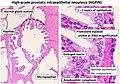 Histopathology of high-grade prostatic intraepithelial neoplasia (HGPIN), annotated
 -
 High-grade prostatic intraepithelial neoplasia low magnification
,_annotated.jpg)

