Factor D: Difference between revisions
CSV import |
CSV import |
||
| Line 23: | Line 23: | ||
[[Category:Complement system]] | [[Category:Complement system]] | ||
{{medicine-stub}} | {{medicine-stub}} | ||
<gallery> | |||
File:Droga_alternatywna.png|Factor_D | |||
File:Factor_D_Non-Canonical.png|Factor_D Non-Canonical | |||
File:Factor_D_Canonical_Configuration.png|Factor_D Canonical Configuration | |||
</gallery> | |||
Latest revision as of 02:01, 18 February 2025
Factor D is a protein that plays a crucial role in the alternative complement pathway, one of the body's immune response mechanisms. It is part of the complement system, a group of proteins that work together to destroy foreign cells, trigger inflammation, and perform other immune system functions.
Structure[edit]
Factor D is a single-chain polypeptide composed of 214 amino acids. It is synthesized in the liver and then released into the bloodstream, where it circulates as an inactive enzyme. The active form of Factor D is generated through the cleavage of a single peptide bond, a process that is catalyzed by Factor B.
Function[edit]
Factor D is a serine protease that is essential for the activation of the alternative complement pathway. It cleaves Factor B, which is bound to C3b, to generate the active enzyme C3 convertase. This enzyme then cleaves C3, the most abundant protein in the complement system, into C3a and C3b. C3b binds to the surface of foreign cells, marking them for destruction by phagocytes.
Clinical significance[edit]
Deficiencies in Factor D can lead to an increased susceptibility to infections, particularly from bacteria and fungi. This is because the alternative complement pathway plays a key role in the body's defense against these types of pathogens. In addition, mutations in the gene that encodes Factor D have been associated with age-related macular degeneration, a leading cause of blindness in older adults.
See also[edit]
References[edit]
<references />

-
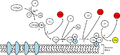 Factor_D
 -
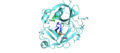 Factor_D Non-Canonical
 -
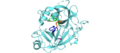 Factor_D Canonical Configuration


