Tunga penetrans: Difference between revisions
CSV import |
CSV import |
||
| Line 48: | Line 48: | ||
[[Category:Fleas]] | [[Category:Fleas]] | ||
[[Category:Insects described in 1758]] | [[Category:Insects described in 1758]] | ||
<gallery caption="Tunga_penetrans"> | |||
File:ChiggerBMNH_(cropped).jpg|Chigger under microscope | |||
File:Tunga_penetrans_(1).JPG|Tunga penetrans | |||
File:Jigger_infested_foot_(2).jpg|Jigger infested foot | |||
</gallery> | |||
Latest revision as of 01:55, 18 February 2025
A parasitic insect causing skin infestation in humans and animals
Tunga penetrans, commonly known as the chigoe flea, jigger, or sand flea, is a parasitic insect found in tropical and subtropical regions. It is notorious for causing a condition known as tungiasis in humans and animals.
Description[edit]
Tunga penetrans is the smallest known flea, measuring about 1 mm in length. The flea is reddish-brown and has a flattened body, which allows it to move easily through the host's skin. The female flea burrows into the skin of its host, where it feeds on blood and lays eggs.
Life Cycle[edit]
The life cycle of Tunga penetrans consists of four stages: egg, larva, pupa, and adult. After the female flea burrows into the host's skin, it swells as it becomes engorged with blood and eggs. The eggs are expelled through the skin and fall to the ground, where they hatch into larvae. The larvae develop into pupae and eventually emerge as adult fleas, ready to find a new host.
Pathology[edit]
The infestation of Tunga penetrans in humans is known as tungiasis. The condition is characterized by severe itching, inflammation, and ulceration at the site of penetration. Secondary infections are common due to the open sores created by the flea. In severe cases, tungiasis can lead to complications such as tetanus, gangrene, and loss of toenails.
Prevention and Treatment[edit]
Preventive measures include wearing closed footwear and using insect repellents in endemic areas. Treatment involves the careful extraction of the embedded flea, followed by disinfection of the wound. In some cases, antibiotics may be necessary to treat secondary infections.
Distribution[edit]
Tunga penetrans is native to Central and South America but has spread to sub-Saharan Africa and parts of Asia. It thrives in sandy environments, often in rural and impoverished areas where people walk barefoot.
Impact on Communities[edit]
Tungiasis is a significant public health issue in affected regions, leading to disability and social stigma. Efforts to control the spread of Tunga penetrans include public health education, improved sanitation, and community-based interventions.
Related pages[edit]
References[edit]
- Linnaeus, C. (1758). Systema Naturae.
- Feldmeier, H., & Heukelbach, J. (2009). "Epidemiology and morbidity of tungiasis". Tropical Medicine & International Health.
- Muehlen, M., et al. (2006). "The impact of tungiasis on the quality of life in poor communities in northeast Brazil". Open Dermatology Journal.
- Tunga_penetrans
-
 Chigger under microscope
 -
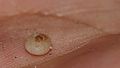 Tunga penetrans
 -
 Jigger infested foot
.jpg)
.JPG)
.jpg)
