P3 peptide: Difference between revisions
CSV import Tags: mobile edit mobile web edit |
CSV import |
||
| Line 26: | Line 26: | ||
{{medicine-stub}} | {{medicine-stub}} | ||
== P3_peptide == | |||
<gallery> | |||
File:P3_peptide_2013-10-23_17-14.jpg|P3_peptide | |||
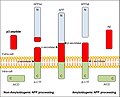
File:APP_molecular_processing.jpg|APP molecular processing | |||
File:P3_peptide_synthesis.jpg|P3 peptide synthesis | |||
</gallery> | |||
Latest revision as of 01:53, 18 February 2025
P3 Peptide is a short chain of amino acids that is significant in the field of biochemistry and medicine, particularly in the study of immune system responses and vaccine development. The P3 peptide has been identified as a critical component in various biological processes, including the modulation of immune responses and the potential treatment of certain diseases.
Overview[edit]
Peptides are short chains of amino acids, which are the building blocks of proteins. They play crucial roles in many biological functions, acting as hormones, neurotransmitters, growth factors, and antigens. The P3 peptide, specifically, has garnered interest for its unique properties and its potential applications in immunotherapy and vaccine design.
Structure and Function[edit]
The structure of P3 peptide consists of a specific sequence of amino acids that determines its function and its interaction with other molecules in the body. This peptide can mimic certain parts of a pathogen's structure, making it a valuable tool for vaccine development. By introducing the P3 peptide into the body, it is possible to stimulate the immune system to recognize and fight the actual pathogen more effectively.
Applications in Medicine[edit]
One of the primary applications of P3 peptide is in the development of vaccines. By using peptides that mimic parts of a pathogen, researchers can create vaccines that are both safe and effective. This approach has been explored for various diseases, including influenza, HIV, and certain types of cancer.
In addition to vaccine development, P3 peptide has potential applications in the treatment of autoimmune diseases. By modulating the immune response, peptides can help reduce inflammation and prevent the immune system from attacking the body's own tissues.
Research and Development[edit]
Research on P3 peptide is ongoing, with scientists exploring its potential in various medical applications. Studies have focused on understanding the peptide's structure-function relationships, optimizing its delivery to the immune system, and evaluating its safety and efficacy in clinical trials.
Challenges and Future Directions[edit]
Despite the promising potential of P3 peptide, there are challenges to overcome. These include ensuring the stability of the peptide, achieving targeted delivery to the immune system, and minimizing potential side effects. Future research will likely focus on addressing these challenges and expanding the applications of P3 peptide in medicine.
Conclusion[edit]
P3 peptide represents a promising area of research in biochemistry and medicine, with potential applications in vaccine development and the treatment of autoimmune diseases. As research progresses, the understanding of P3 peptide's role in the immune system and its potential therapeutic applications will continue to expand, offering new possibilities for disease prevention and treatment.

P3_peptide[edit]
-
 P3_peptide
 -
 APP molecular processing
 -
 P3 peptide synthesis


