Dust pneumonia: Difference between revisions
CSV import |
CSV import |
||
| Line 31: | Line 31: | ||
{{Medicine-stub}} | {{Medicine-stub}} | ||
<gallery> | |||
File:Dust_storm_approaching_Stratford,_Texas.jpg|Dust storm approaching Stratford, Texas | |||
File:Dust_storm_approaching_Stratford,_Texas.jpg|Dust storm approaching Stratford, Texas | |||
</gallery> | |||
Revision as of 01:48, 18 February 2025
Dust Pneumonia is a respiratory condition caused by the excessive inhalation of dust, leading to inflammation of the lungs. This condition was particularly prevalent during the Dust Bowl of the 1930s in the United States, where severe dust storms significantly impacted the health of the population in the Great Plains. Dust pneumonia can result from various sources of dust, including but not limited to, soil, silica, and industrial pollutants.
Causes and Risk Factors
The primary cause of dust pneumonia is the inhalation of fine dust particles into the lungs. These particles can come from natural sources, such as desert sand, or from human activities, such as mining, construction, and agriculture. Individuals at higher risk include those with prolonged exposure to dusty environments, the elderly, children, and those with pre-existing respiratory conditions like asthma or COPD.
Symptoms
Symptoms of dust pneumonia include persistent cough, difficulty breathing, chest pain, and in severe cases, cyanosis (bluish tint to the skin due to lack of oxygen). Additional symptoms may include fever, fatigue, and weight loss, indicating a systemic response to the inflammation in the lungs.
Diagnosis
Diagnosis of dust pneumonia involves a thorough medical history and physical examination, focusing on occupational and environmental exposure to dust. Diagnostic tests may include chest X-rays, which can show abnormalities in the lungs, and pulmonary function tests (PFTs) to assess the extent of lung damage. In some cases, a CT scan may be necessary for a more detailed view of the lungs.
Treatment
Treatment for dust pneumonia primarily involves removing the individual from the source of dust exposure and providing supportive care. This may include oxygen therapy for those experiencing difficulty breathing and medications to open breathing passages. In cases where an infection is present, antibiotics may be prescribed. Severe cases may require hospitalization.
Prevention
Preventive measures include minimizing exposure to dust through the use of protective equipment, such as masks or respirators, and improving air quality in work and living environments. Regular health check-ups are recommended for individuals at risk to monitor lung health and prevent complications.
Historical Context
The term "dust pneumonia" is often associated with the Dust Bowl era, a period of severe dust storms that damaged the ecology and agriculture of the American and Canadian prairies during the 1930s. The storms were caused by severe drought and failure to apply dryland farming methods to prevent wind erosion. The health impacts of these dust storms were devastating, with thousands suffering from dust pneumonia and other dust-related illnesses.
See Also

-
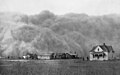 Dust storm approaching Stratford, Texas
 -
Dust storm approaching Stratford, Texas

