Twelfth rib syndrome: Difference between revisions
CSV import |
CSV import |
||
| Line 31: | Line 31: | ||
[[Category:Musculoskeletal disorders]] | [[Category:Musculoskeletal disorders]] | ||
[[Category:Pain]] | [[Category:Pain]] | ||
<gallery> | |||
File:Sobo_1909_35.png|Twelfth rib syndrome | |||
File:1112_Muscles_of_the_Abdomen_Anterolateral.png|Muscles of the abdomen anterolateral | |||
</gallery> | |||
Revision as of 01:41, 18 February 2025
Twelfth Rib Syndrome


Twelfth rib syndrome is a condition characterized by pain in the lower thoracic region, specifically associated with the twelfth rib. This syndrome is often caused by irritation or displacement of the twelfth rib, which can lead to discomfort and pain in the surrounding muscles and tissues.
Symptoms
The primary symptom of twelfth rib syndrome is pain in the lower back or upper abdomen. This pain is often described as sharp or stabbing and may be exacerbated by certain movements, such as bending or twisting. Patients may also experience tenderness when pressure is applied to the affected area.
Causes
Twelfth rib syndrome is typically caused by hypermobility or subluxation of the twelfth rib. This can occur due to trauma, repetitive motion, or congenital abnormalities. The condition may also be associated with other musculoskeletal disorders that affect the stability of the rib cage.
Diagnosis
Diagnosis of twelfth rib syndrome is primarily clinical, based on the patient's history and physical examination. A healthcare provider may perform a "hooking maneuver," where they apply pressure to the lower ribs to reproduce the pain. Imaging studies, such as X-rays or MRIs, are generally not required but may be used to rule out other conditions.
Treatment
Treatment for twelfth rib syndrome often involves conservative measures such as physical therapy, pain management, and activity modification. In some cases, local anesthetic injections or corticosteroid injections may be used to alleviate pain. Surgical intervention is rarely necessary but may be considered in severe cases where conservative treatments fail.
Related Pages
| Medical conditions | ||||||||||
|---|---|---|---|---|---|---|---|---|---|---|
This medical condition related article is a stub. You can help WikiMD by expanding it.
|
-
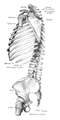 Twelfth rib syndrome
 -
 Muscles of the abdomen anterolateral
